The HelloLazo library
All the guides.
Find an answer to a specific question or explore the cats and dogs reading paths. Every guide includes sources and related articles.
40 guides
 Cats · First days · Main guide
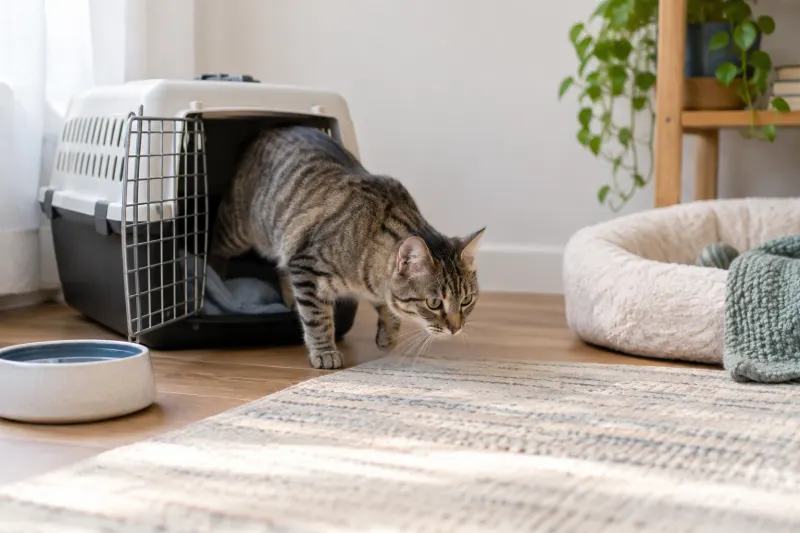
Your adopted cat’s first day at home: a calm start
Set up a safe room and a simple routine for your adopted cat, and learn which signs call for veterinary advice.
Read guide Cats · First days
How to prepare your home before a new cat arrives
A practical checklist for a safe starting room, hazards to remove and the essentials your new cat will need.
Read guide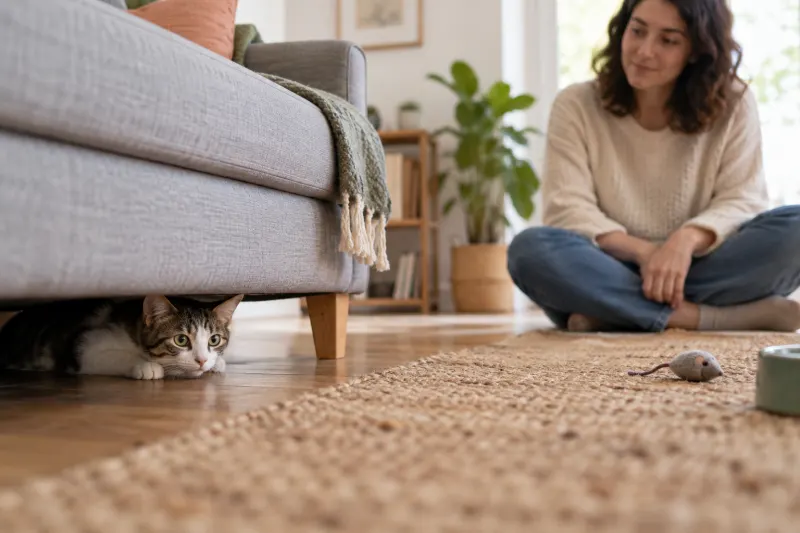 Cats · First days
My new cat is hiding: what to watch and how to help
Learn why a newly adopted cat may hide, how to help without forcing contact and when to call a veterinarian.
Read guide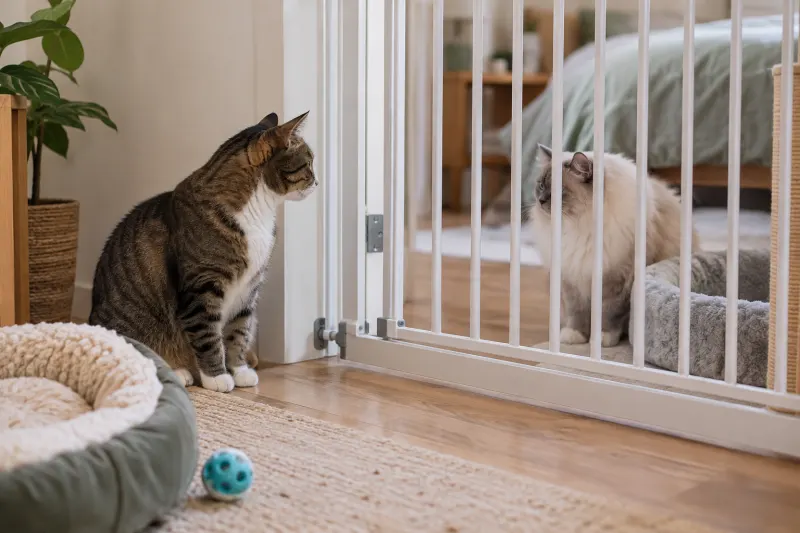 Cats · First days
How to introduce two cats at a comfortable pace
A step-by-step introduction for a new and resident cat, from separate rooms and scent exchange to supervised meetings.
Read guide Cats · Behaviour · Main guide
Cat body language: reading the whole picture
Learn to read posture, tail, ears, eyes and context to recognise when a cat feels relaxed, alert or needs space.
Read guide Cats · Behaviour
What your cat’s tail may mean in different situations
Understand raised, tucked, puffed and moving tails without overlooking the rest of your cat’s body.
Read guide Cats · Behaviour
Why your cat meows at night and what to check
Explore possible causes of night-time meowing, useful observations and signs that warrant a veterinary visit.
Read guide Cats · Behaviour
My cat bites during play: how to redirect the game
Learn why play bites happen, why hands should not become prey and when a bite needs medical attention.
Read guide Cats · Behaviour
Signs of stress in cats and how to help
Recognise behaviour changes that may reflect stress, review your cat’s environment and know when veterinary advice comes first.
Read guide Cats · Behaviour
How to play with a cat safely and at their pace
Try hunting-style games, hiding places and food puzzles without using hands as prey or forcing interaction.
Read guide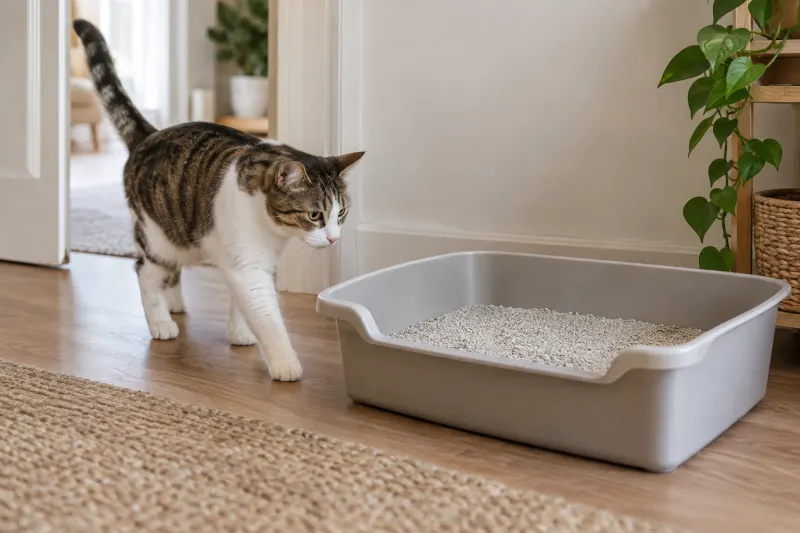 Cats · Litter box · Main guide
How to choose and set up a litter box your cat will use
Choose an accessible litter box, place it well, select suitable litter and keep it clean without stressing your cat.
Read guide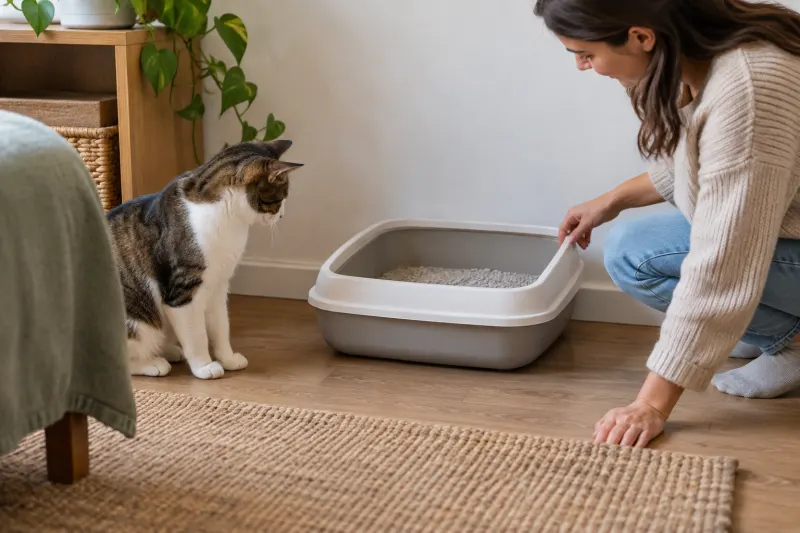 Cats · Litter box
My cat is not using the litter box: what to check first
Recognise urgent urinary signs and review litter-box location, cleaning, litter and household stress.
Read guide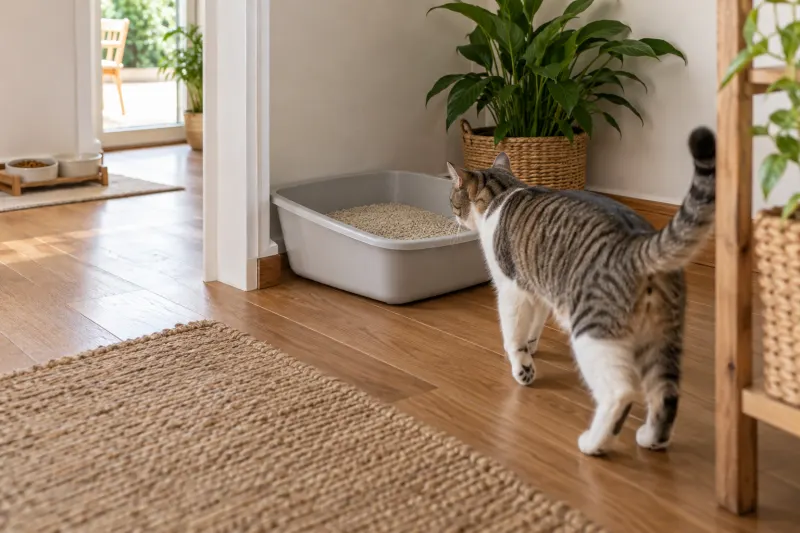 Cats · Litter box
Where to put a cat litter box so it feels safe
Find a quiet, accessible litter-box location away from food, noise and blocked exits, even in a small home.
Read guide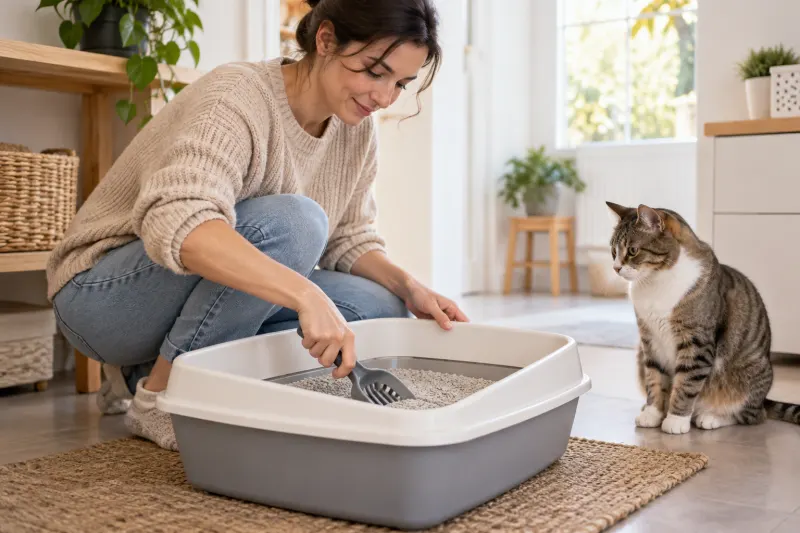 Cats · Litter box
How often should you clean your cat’s litter box?
A practical routine for scooping waste, replacing litter and washing the tray without strong fragrances.
Read guide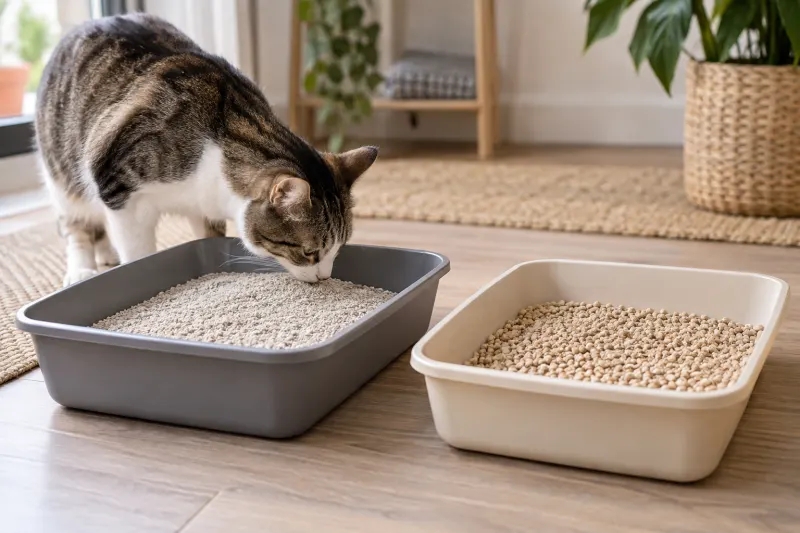 Cats · Litter box
Types of cat litter: how to choose what works
Compare clumping, non-clumping, plant-based and silica litter by texture, dust, cleaning and your cat’s acceptance.
Read guide Cats · Feeding · Main guide
What can cats eat? A safe everyday diet
Choose complete cat food, understand the limited role of treats and recognise foods you should keep away from your cat.
Read guide Cats · Feeding
What to feed a kitten at each stage of growth
Understand nursing, gradual weaning and complete kitten food, plus signs that a young kitten needs urgent veterinary help.
Read guide Cats · Feeding
Can cats eat tuna? Yes, but only occasionally
Learn why a small taste of human canned tuna may be tolerated but should never replace a complete cat diet.
Read guide Cats · Feeding
Foods toxic to cats: what to remove and what to do
Identify dangerous foods such as onion, garlic, chocolate and alcohol, and take the right first steps after a possible ingestion.
Read guide Cats · Feeding
Wet or dry cat food: the differences that matter
Compare water content, storage, portions and individual preferences when choosing wet food, dry food or both.
Read guide Dogs · First days · Main guide
Your puppy’s first day at home: a calm start
Plan your puppy’s first day with a quiet resting space, familiar food, toilet breaks and reassuring company through the first night.
Read guide Dogs · First days
How to puppy-proof your home before arrival
Prepare a safe home for a new puppy: remove hazards, choose a resting area and organise food, toys and toilet access.
Read guide Dogs · First days
Puppy crying at night: how to help
Find out why a puppy may cry at night and how toilet breaks, a calm sleep routine and reassurance can help them settle.
Read guide Dogs · First days
A puppy’s daily routine: food, rest and learning
Build a flexible puppy routine around meals, toilet breaks, play, new experiences and uninterrupted sleep.
Read guide Dogs · Training · Main guide
How to train a puppy with rewards
Start puppy training with consistent routines, timely rewards and short lessons in recall, calm greetings and everyday manners.
Read guide Dogs · Training
Puppy toilet training: a practical routine
Teach a puppy where to pee and poo with well-timed breaks, immediate rewards and a calm response to accidents.
Read guide Dogs · Training
Puppy biting hands and clothes: what to do
Manage normal puppy play-biting, provide suitable chew toys and learn when biting needs professional assessment.
Read guide Dogs · Training
How to socialise a puppy without overwhelming them
Introduce a puppy to people, dogs, sounds and places gradually, while checking what is safe before their vaccinations are complete.
Read guide Dogs · Training
Dog pulling on the leash: teach a looser walk
Teach a dog to walk on a loose leash with rewards, short practice sessions and pauses when the lead becomes tight.
Read guide Dogs · Training
Dog jumping on visitors: teach a calmer greeting
Manage the front door and teach your dog that guests give attention when all four paws stay on the floor.
Read guide Dogs · Behaviour · Main guide
Dog body language: how to read the whole picture
Learn to assess a dog’s posture, eyes, mouth, tail and surroundings to recognise comfort, fear and a need for space.
Read guide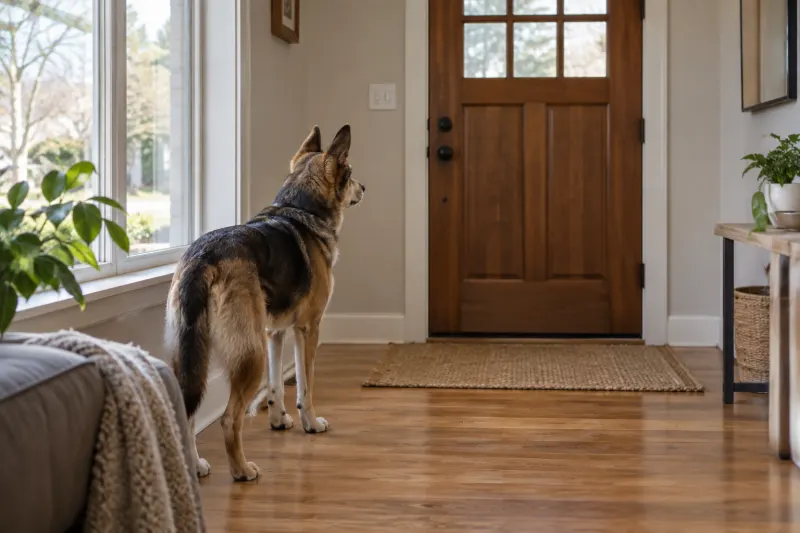 Dogs · Behaviour
My dog barks when left alone: what to observe
Record when a dog barks during an absence and look for the wider pattern before assuming separation anxiety.
Read guide Dogs · Behaviour
Separation anxiety in dogs: signs and support
Learn what to record when a dog struggles to be alone and why veterinary and individual behaviour support matter.
Read guide Dogs · Behaviour
Dog afraid of loud noises: how to help
Help a dog frightened by fireworks, thunder or other loud sounds with a safe retreat and a gradual professional plan.
Read guide Dogs · Behaviour
Scent games for dogs: easy ideas at home
Try simple searches for food or toys, slow sniffing walks and hiding games that match your dog’s ability.
Read guide Dogs · Feeding · Main guide
What can dogs eat? Everyday food safety guide
Find out which familiar foods dogs may have as small treats, which ones to avoid and when to call a vet.
Read guide Dogs · Feeding
Can dogs eat strawberries?
Dogs can usually have fresh strawberries as an occasional treat. Learn how to serve them and why processed strawberry products need checking.
Read guide Dogs · Feeding
Can dogs eat banana?
Banana can be an occasional dog treat. Learn how to offer small pieces and when to check with your vet first.
Read guide Dogs · Feeding
Foods toxic to dogs: what to avoid and what to do
Recognise dangerous foods such as grapes, chocolate and xylitol, and learn what information to give a vet after exposure.
Read guide Dogs · Feeding
How to choose dog food beyond the front of the bag
Compare dry and wet dog foods using life-stage suitability, nutritional completeness, manufacturer information and calorie content.
Read guideNo guides match. Try another word or change the species.