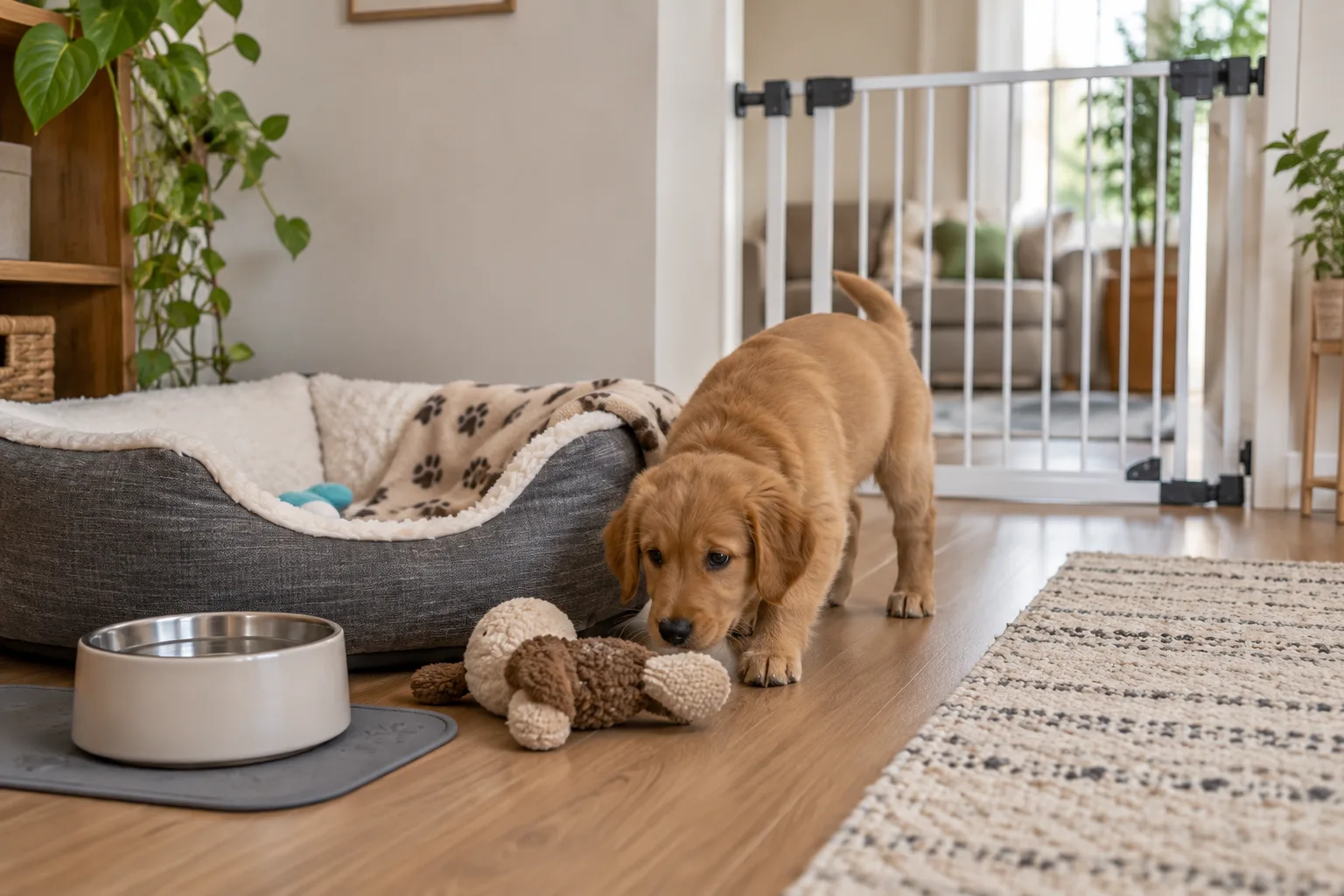
Begin with one small area that is safe and easy to supervise. A puppy does not need access to every room on arrival. They do need somewhere to rest, drink and learn the household routine without reaching wires, chemicals or objects they might swallow.
Look at each room from puppy height
Check under furniture and behind doors. Store medication, detergents, batteries, string, children’s toys and rubbish in closed cupboards. Cover or move electrical cables. Check for unsafe plants and accessible foods: chocolate, grapes, raisins, onions and products containing xylitol should never be within reach. If other animals live at home, create separate spaces for gradual introductions.
A baby gate can help manage stairs and rooms you cannot watch closely. It does not replace supervision: puppies grow and learn to climb. Outdoors, inspect fences, tools, chemicals and gaps that could allow an escape.
Set up four useful spaces
- Rest: a bed or blanket in a quiet spot. Everyone should leave the puppy undisturbed while sleeping.
- Food and water: stable bowls and fresh water. Keep the food they already know on hand.
- Toilet: decide where you will take the puppy after sleeping, eating or playing. Ask your vet which outdoor areas are appropriate before their vaccinations are complete.
- Play: toys suited to your puppy’s size. Check them regularly and remove broken pieces.
A crate or pen can become a comfortable resting area when introduced gradually and positively. It should not be used to isolate a distressed puppy.
Buy the basics first
A bed, bowls, complete puppy food, a well-fitting harness or collar, leash, waste bags, safe toys and cleaning supplies are enough to begin. You can choose other accessories once you know what suits your dog. Ask your vet about identification, vaccinations, dental care and parasite prevention where you live.
Once the space is ready, follow the first-day plan and build a puppy routine. Review foods that are toxic to dogs so everyone in the household knows what must be kept away.
Sources consulted
This guide provides general information. If your pet has symptoms, pain or a sudden change in behaviour, speak to a veterinarian. Read our editorial policy.