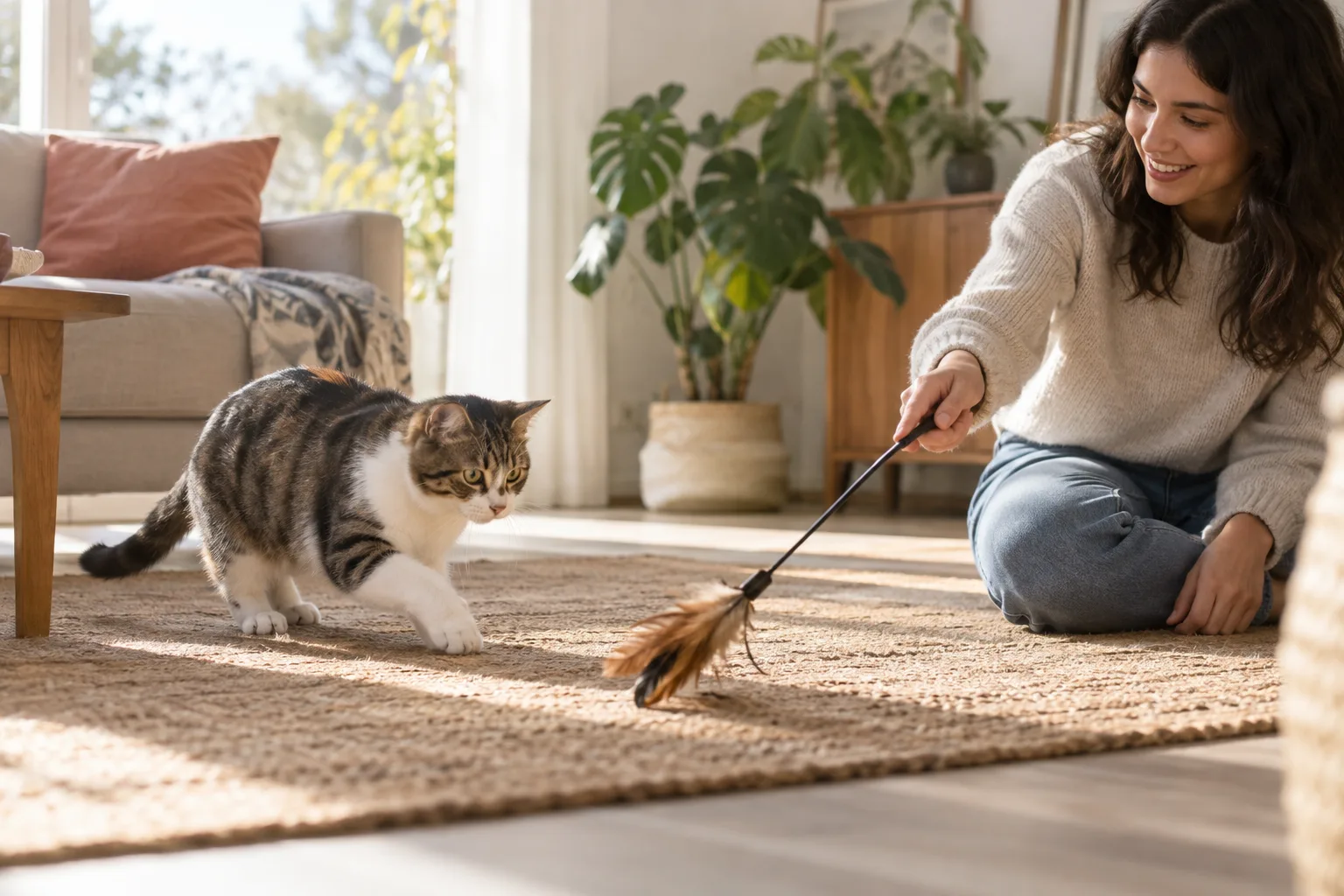
Make the toy the prey, not your hand. A wand, ball or other safe object lets your cat stalk, run, jump and catch it. Include pauses and end when the cat loses interest or appears tired.
Start a simple game
Move a wand behind a box or along the floor, alternating movement and stillness. Rather than shaking it constantly in front of the cat’s face, give them a chance to notice and choose to pursue it. Let them catch it several times. A toy that always escapes can make play frustrating.
Begin with short sessions and watch their response. A kitten may seek more play than an older cat; a cat with pain or reduced mobility needs an adapted game. There is no required length for every animal. If they sit back, walk away or look uncomfortable, let the game stop.
Offer different activities
Cardboard boxes with safe openings, scratching posts, places to climb and food puzzles offer variety. Rotate toys instead of leaving all of them out. Supervise string, feathers and small detachable parts that could be swallowed. Put wand toys away when play ends if they have accessible cords.
For food-search games, use part of the cat’s usual daily ration rather than adding unlimited treats. In a multi-cat home, ensure each animal can play and eat without another pushing them away.
Keep boundaries clear
Do not make fingers or feet the target. If a cat lunges towards them, stop moving and offer a distant toy once they are calm. Do not punish a cat for chasing: it is a natural part of play. Teach them where to direct that energy instead.
If a cat who used to play stops, appears stiff while jumping or avoids movement, discuss the change with a veterinarian. Play supports wellbeing and can also reveal changes in the cat’s usual physical state. If the game turns into bites, follow the specific advice for a cat biting during play.
Sources consulted
This guide provides general information. If your pet has symptoms, pain or a sudden change in behaviour, speak to a veterinarian. Read our editorial policy.