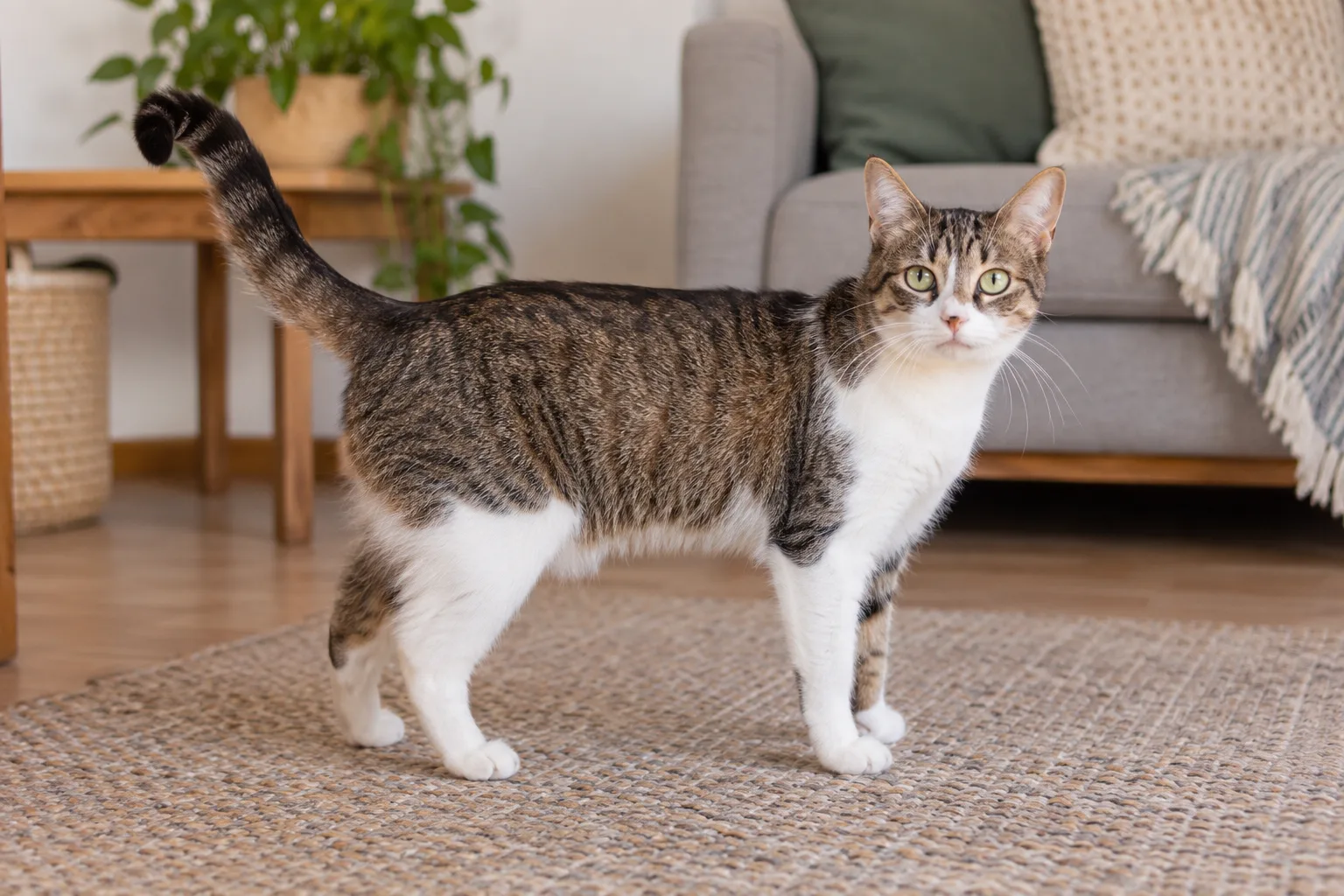
To understand a cat, look at the whole body and what is happening nearby. A raised tail may be part of a relaxed greeting, but no single gesture reliably tells you how the cat feels. Compare what you see with that individual cat’s normal behaviour and leave a way for them to move away.
Signs of comfort
A relaxed cat often moves freely, holds their ears in a natural position and has soft or partly closed eyes. They may approach with their tail up, rub their cheeks on objects or blink slowly. Lying on one side or showing the belly can signal trust; it does not automatically invite a belly rub. Offer a hand to sniff and watch whether the cat stays nearby.
Purring also needs context. It often accompanies a pleasant interaction, but cats may purr when stressed or in pain. If the cat is crouched, unusually still or eating less, do not treat the sound alone as proof that all is well.
Signs of worry or discomfort
A low body, ears turned sideways or back, wide pupils, raised fur, hissing and defensive swipes suggest the cat needs space. Strong tail movements may accompany irritation, although a moving tail during play may mean something else. Check whether the cat can leave, whether someone is touching them and whether another animal is nearby.
Stop the interaction and allow retreat. Holding a frightened cat to “show them it is safe” can increase distress. If a bite happened during petting, think back to earlier signs that contact was becoming unwelcome.
Respond without crowding
Approach calmly from the side, without blocking an exit. Avoid staring. If your cat looks comfortable, blink slowly and wait for them to initiate contact. Use toys, not hands or feet, for play. A new cat’s hiding place is useful communication: they can say “not yet” without confrontation.
A sudden change in body language can reflect pain or illness. If your cat unexpectedly hides, stops playing, avoids touch or becomes aggressive, contact a veterinarian. A qualified behaviour professional can help after medical causes have been checked. When those changes persist, review the broader signs of stress in cats alongside your veterinarian’s advice.
Sources consulted
This guide provides general information. If your pet has symptoms, pain or a sudden change in behaviour, speak to a veterinarian. Read our editorial policy.