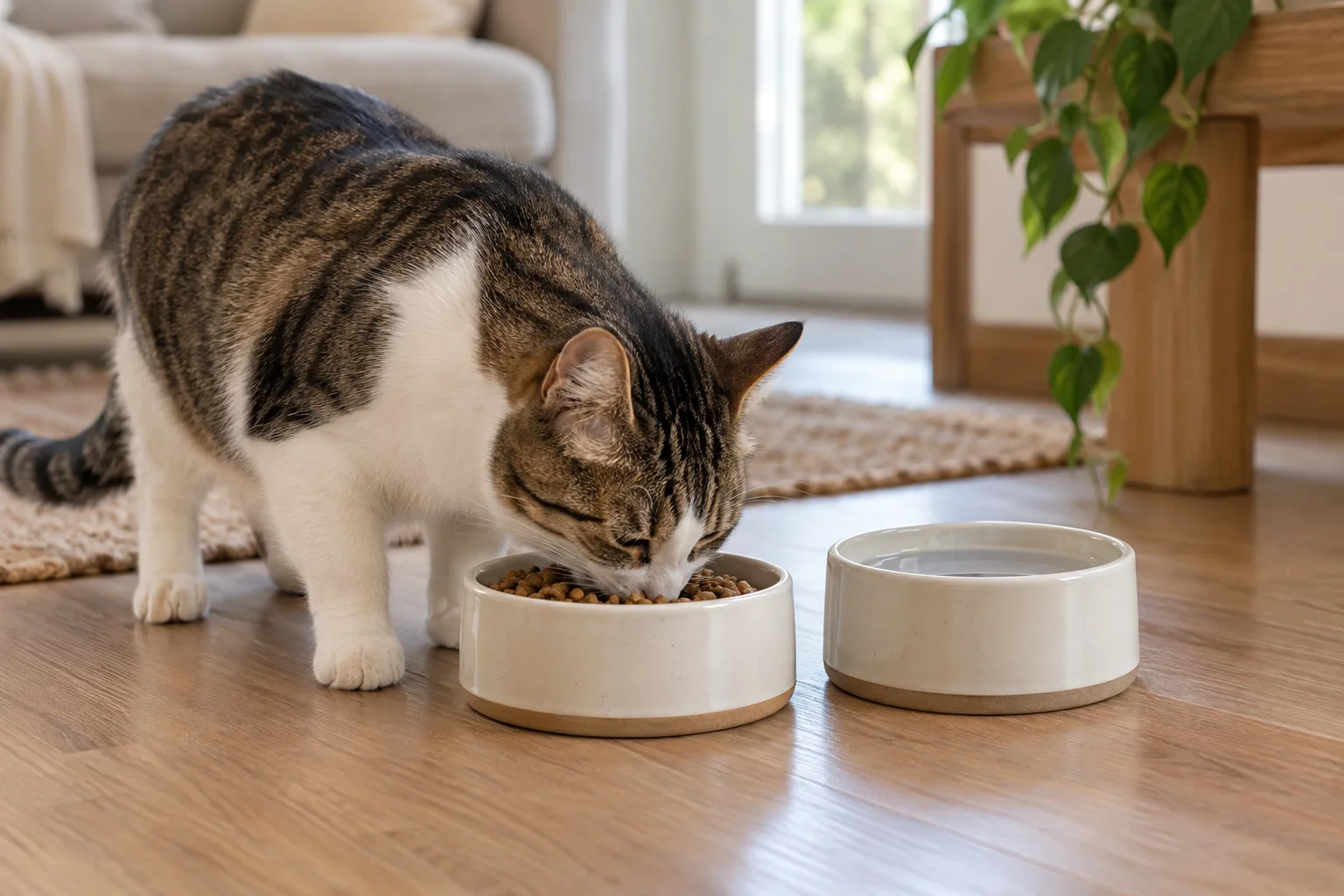
A cat’s main diet should be a complete, balanced food formulated for their life stage, with clean water always available. Wet food, dry food or a suitable combination may meet their needs. An occasional safe piece of human food does not become a balanced feline diet; cats have specific nutritional requirements.
Read the nutritional statement first
Look for a statement that the food is complete for cats and check whether it is intended for kittens, adults, pregnancy or another life stage. Do not choose only by the ingredient list or a marketing claim on the front. WSAVA also encourages owners to consider who formulates the diet, the manufacturer’s quality controls and the nutritional information it can provide.
The amount a cat needs varies with age, weight, activity, reproductive status and health. Package directions are a starting point, not a fixed ration for every animal. Watch body condition and ask your veterinarian to adjust the portion if weight changes. Do not start a therapeutic diet on your own.
Home food and treats have a limited role
Small amounts of simple, fully cooked, unseasoned food may be suitable occasionally for some cats, but cannot replace a complete meal. Plain boneless cooked chicken is one example; feeding only chicken long term risks deficiencies. Treats provide calories too and should be counted in the daily amount. Ask before adding extras if your cat has allergies, digestive disease or a medical diet.
Do not use cow’s milk as a regular drink; many cats cannot digest lactose well. Offer fresh water in several places if that encourages drinking. A fully homemade diet needs individual formulation by a veterinary nutrition specialist. Guessing proportions of meat, organs and supplements can cause harm.
Foods to keep away
Do not offer onion, garlic, chives, chocolate, coffee, alcohol or raw yeast dough. Keep medicines and human food out of reach. If your cat eats something possibly toxic, remove access, keep the package and contact a veterinarian or animal poison service. Do not induce vomiting unless a professional tells you to.
If your cat stops eating
A cat who persistently refuses food or loses weight needs veterinary assessment. Cornell warns that inadequate intake can lead to serious problems. Do not keep switching flavours while waiting for it to pass, especially if your cat is lethargic, vomiting or already ill. Safe feeding combines an appropriate food with daily observation and individual care when things change. Keep the list of foods toxic to cats handy when checking a new treat or household food.
Sources consulted
This guide provides general information. If your pet has symptoms, pain or a sudden change in behaviour, speak to a veterinarian. Read our editorial policy.