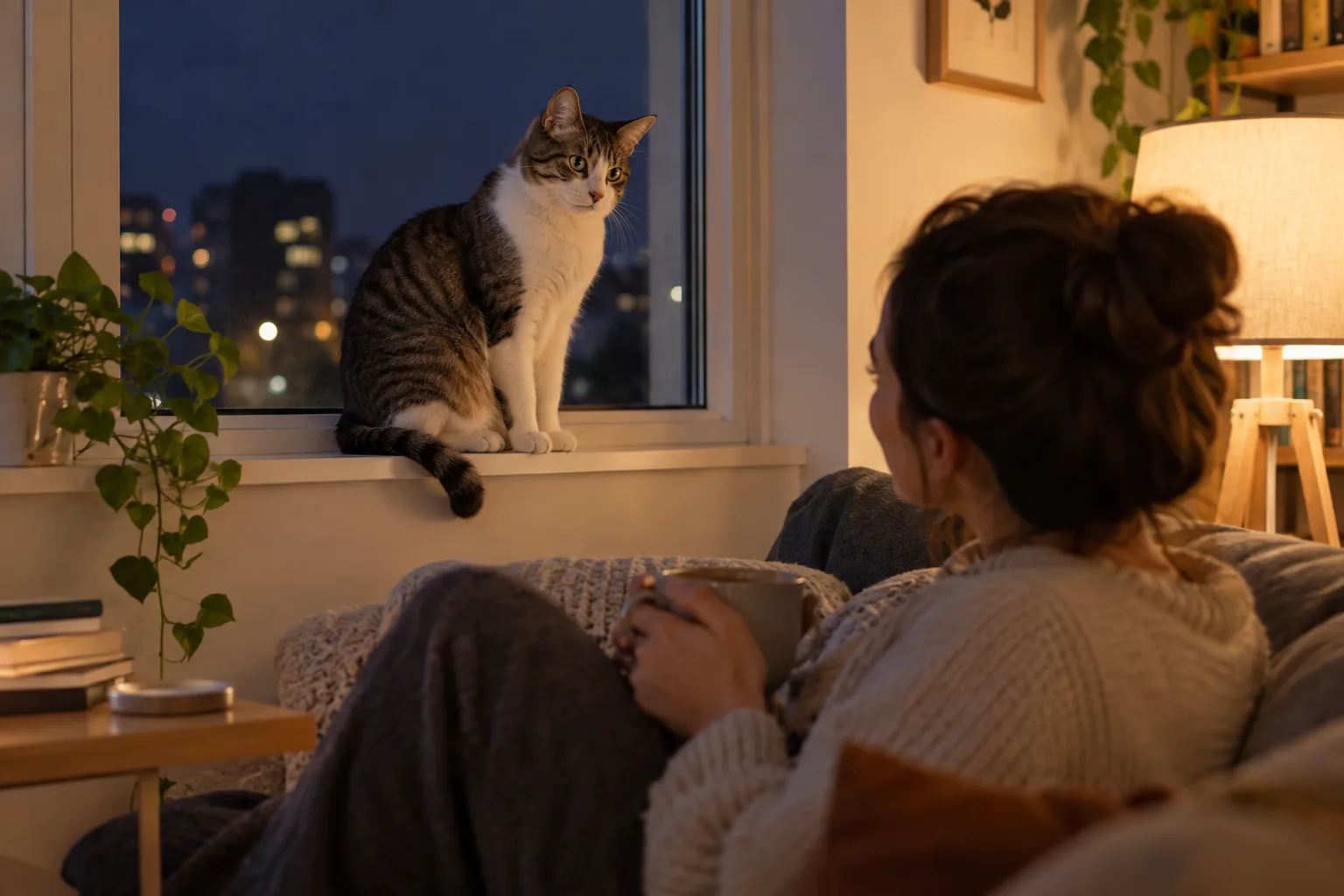
Night-time meowing may be a request for interaction, a response to routine, stress or discomfort. The sound has no single meaning. Begin by asking what has changed, what your cat does besides meowing, and whether eating, drinking and litter-box use remain normal.
Observe before changing anything
For a few days, note the time, duration and place of the meowing. Does it happen near a closed door, by the food bowl or at a window? Is this a newly adopted cat, an older animal or a sudden change in a cat who used to sleep quietly? These details help distinguish an environmental need from a possible medical problem.
Check fresh water, access to a clean litter box and whether another pet blocks the route. Look at body language too: a relaxed cat seeking contact differs from one who crouches, seems confused or hides. Do not punish vocalising; punishment does not explain its cause and may add stress.
Make the evening predictable
If your cat is healthy and the meowing appears linked to activity or attention, try a short interactive play session before bedtime. Use a wand or another safe toy and allow the cat to chase and catch it. Keep feeding, rest and social routines reasonably consistent. Offer opportunities to climb, scratch and observe, especially if they spend many hours alone.
The aim is not to exhaust the cat. Several brief, pleasant games may work better than one long, frustrating chase. Keep hands and feet out of the game. If every meow is answered with food, a feeding expectation may develop; first work out what the cat actually needs.
When to ask a veterinarian
A sudden increase in vocalising, especially with appetite or drinking changes, straining to urinate, pain, confusion or disrupted sleep, deserves a veterinary assessment. Older cats can have medical causes that toys will not solve. If the problem continues after illness has been ruled out, a qualified behaviour professional can help adjust the environment and routine. If vocalising comes with withdrawal or other changes, compare the signs of stress in cats before changing the evening routine again.
Sources consulted
This guide provides general information. If your pet has symptoms, pain or a sudden change in behaviour, speak to a veterinarian. Read our editorial policy.