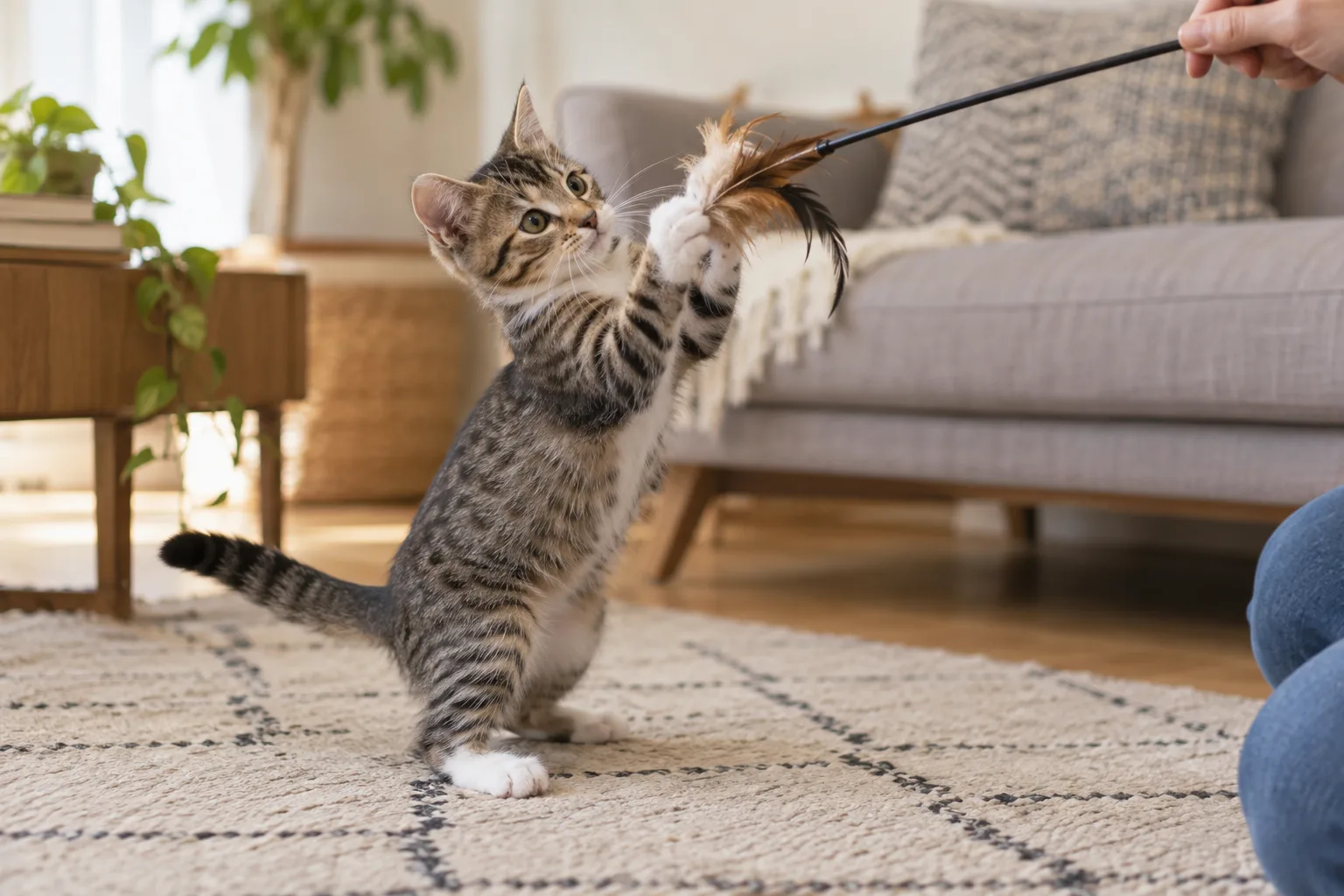
If your cat chases and bites hands or feet during play, change the target. Offer a wand, ball or another toy they can hunt without touching your skin. Avoid wrestling with fingers, even with a kitten. A small bite can become a painful habit as the cat grows.
Is it play or discomfort?
A cat may stalk moving ankles as if they were prey. They may also bite when overexcited or to end petting. Think about the seconds before the bite: were they chasing an object, being held, flicking their tail or turning their ears away? Let them leave if they try. A sudden bite from a cat who previously welcomed touch may indicate pain and should be discussed with a veterinarian.
Change how you play
Use toys that keep space between the cat’s mouth and your body. Move a wand like a small animal that pauses and hides. Allow the cat to catch it at intervals. Do not wave it in their face to demand a reaction. Rotate toys to sustain interest and remove any with parts they might tear off or swallow.
If the cat goes for your hand, hold still and calmly end the session. Resume with an appropriate toy once they have settled. Shouting, hitting or chasing can increase fear or excitement without teaching a safe alternative. Everyone in the household should use the same rule.
If a bite breaks the skin
Wash the wound with soap and running water and seek human medical advice; a cat bite can become infected even when the puncture looks small. Ask a veterinarian about aggression that is new, intense or happens outside play. After pain is ruled out, consider whether the cat has daily access to hiding places, scratching surfaces and hunting-style games.
Teach children to offer toys and step back when the cat leaves. Supervise their interactions. The goal is not to stop the cat wanting to hunt during play, but to give that behaviour a safe target and recognise when the game is over. For practical ways to replace hand wrestling, see how to play with a cat safely.
Sources consulted
This guide provides general information. If your pet has symptoms, pain or a sudden change in behaviour, speak to a veterinarian. Read our editorial policy.