Labrador
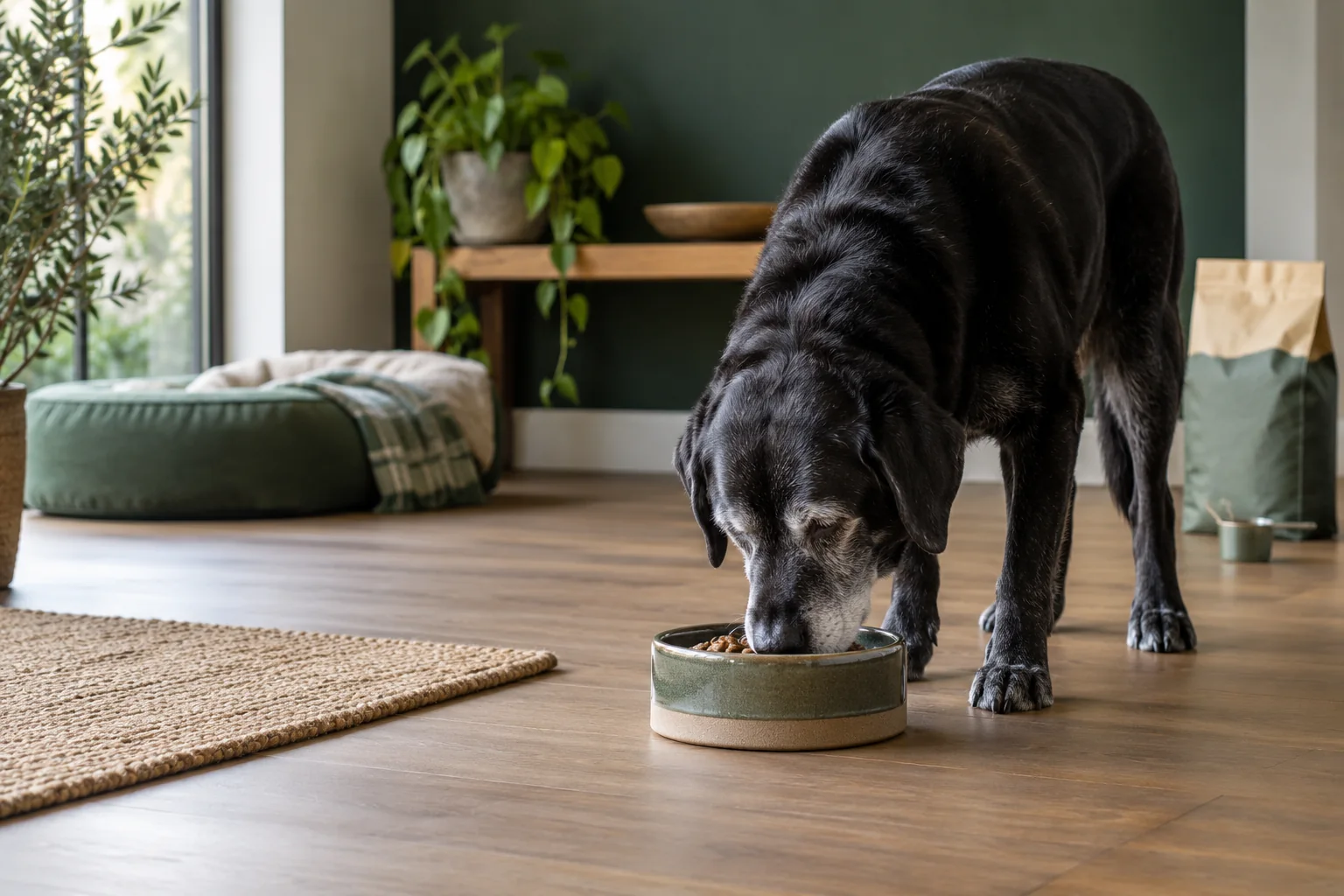
A predisposition to weight gain is documented.
Measure meals and treats; check waistline and ribs regularly.Nutrition · Dogs
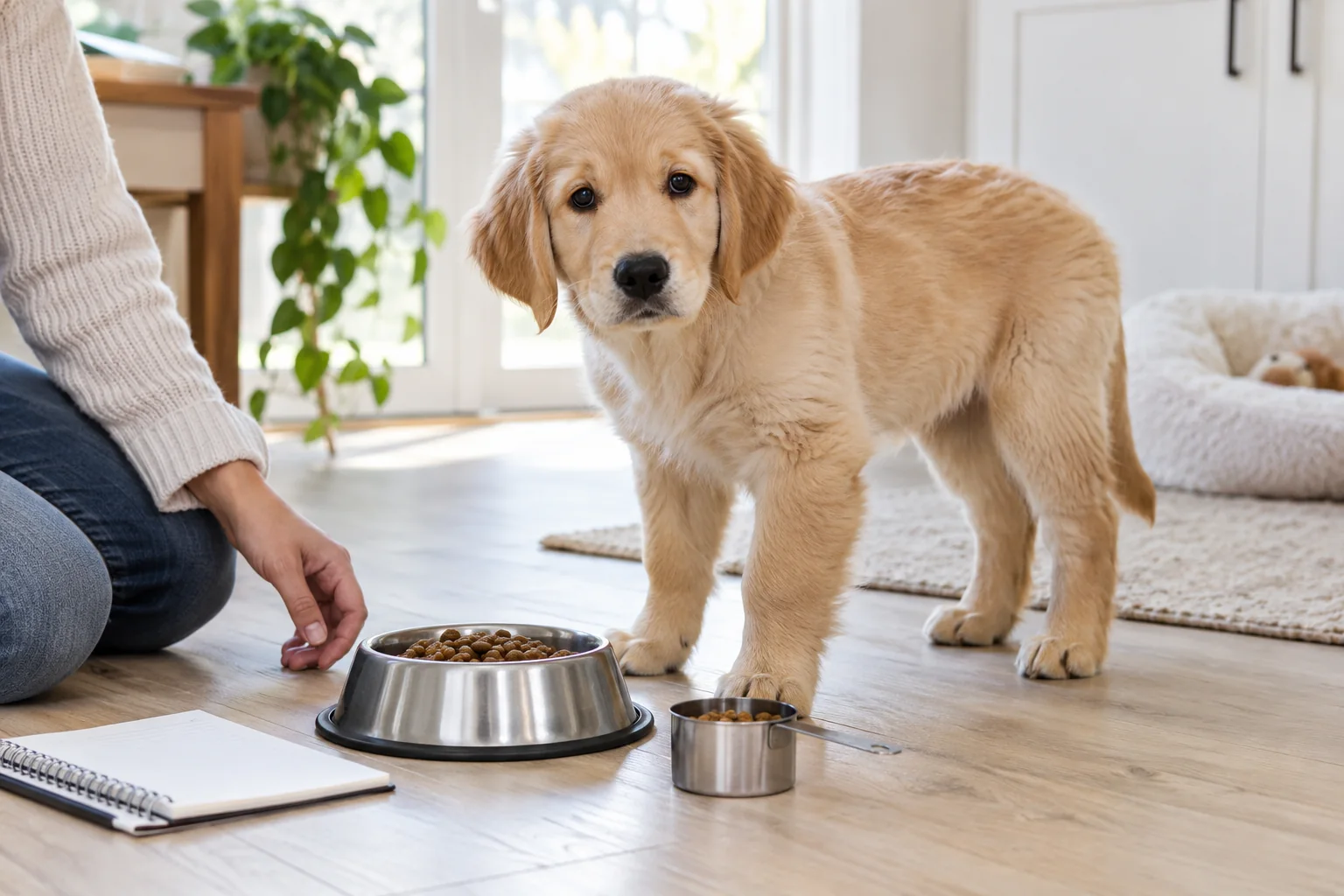
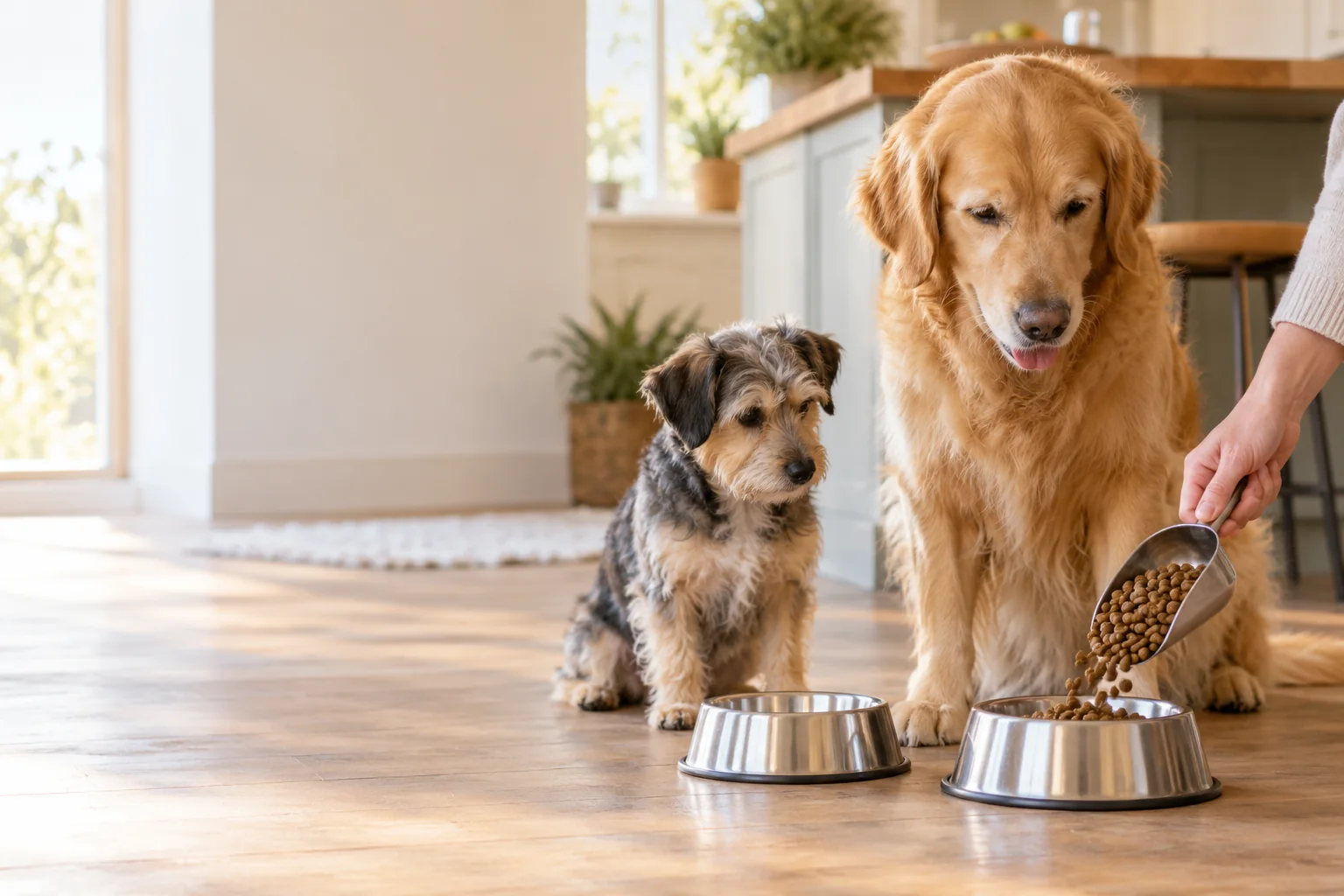
Choose a complete food for your dog’s life stage first. Then adjust the amount for the dog in front of you: its adult size during growth, body condition, activity and health matter more than a breed name on the bag.
01 / Nutrition guidance table
Feeding directions are a starting point. Weight, body condition and veterinary advice determine the final amount.
| Situation | Food foundation | Watch for |
|---|---|---|
| 01Small or medium puppy | Complete growth food in measured meals. | Growth pattern and body condition, beyond age alone. |
| 02Large or giant puppy | Growth food suitable for dogs expected to weigh around 32 kg or more as adults. | Avoid excess energy and added calcium without advice. |
| 03Healthy adult | Complete maintenance food, portioned for the individual. | Weight, waistline, palpable ribs and training rewards. |
| 04Senior | Individual plan after reviewing weight, muscle, appetite and illness. | A “senior” label does not specify one universal nutrient profile. |
HelloLazo / In context
There is no universal breed-by-breed menu. Expected adult size matters for puppy growth. Labradors and beagles are among breeds with a higher risk of weight gain, so measuring portions and monitoring body condition is useful; it does not make one formula right for every dog of that breed.
Breed / Size
These are risks to monitor, not compulsory breed diets. The final choice depends on the individual and the food’s nutrient profile.
A predisposition to weight gain is documented.
Measure meals and treats; check waistline and ribs regularly.Also named among breeds at greater risk of overweight.
Adjust portions to actual body condition and activity.Expected adult size does change food selection for puppies.
If adult weight will be around 32 kg or more, choose food suitable for large-dog growth.02 / Three checks before buying
Look for nutritional adequacy for growth or maintenance. In Europe, check that it is a complete food; elsewhere read the equivalent statement.
Activity, neutering and metabolism change needs. A gram amount borrowed from another dog is not a prescription.
Treats, scraps and supplements add calories. Keep non-complete foods to around 10% or less of daily calories.
An informed choice
Home-prepared or raw diets need more checks than a complete food matched to life stage.
Many published recipes are not complete and balanced. For a regular home-prepared diet, obtain a formula from a board-certified veterinary nutritionist and follow it exactly.
AAHA ↗The FDA has found a higher risk of disease-causing bacteria in raw pet food. Ask about safe alternatives and avoid improvising, especially for puppies and kittens.
FDA ↗03 / Choose your next step
Keep exploring
HelloLazo / Library
Find out which familiar foods dogs may have as small treats, which ones to avoid and when to call a vet.
Read guide ↗Nutrition · DogsCompare dry and wet dog foods using life-stage suitability, nutritional completeness, manufacturer information and calorie content.
Read guide ↗04 / Evidence
General information for healthy animals. Illness, weight loss, poor appetite or a therapeutic diet calls for individual veterinary advice. Editorial policy.