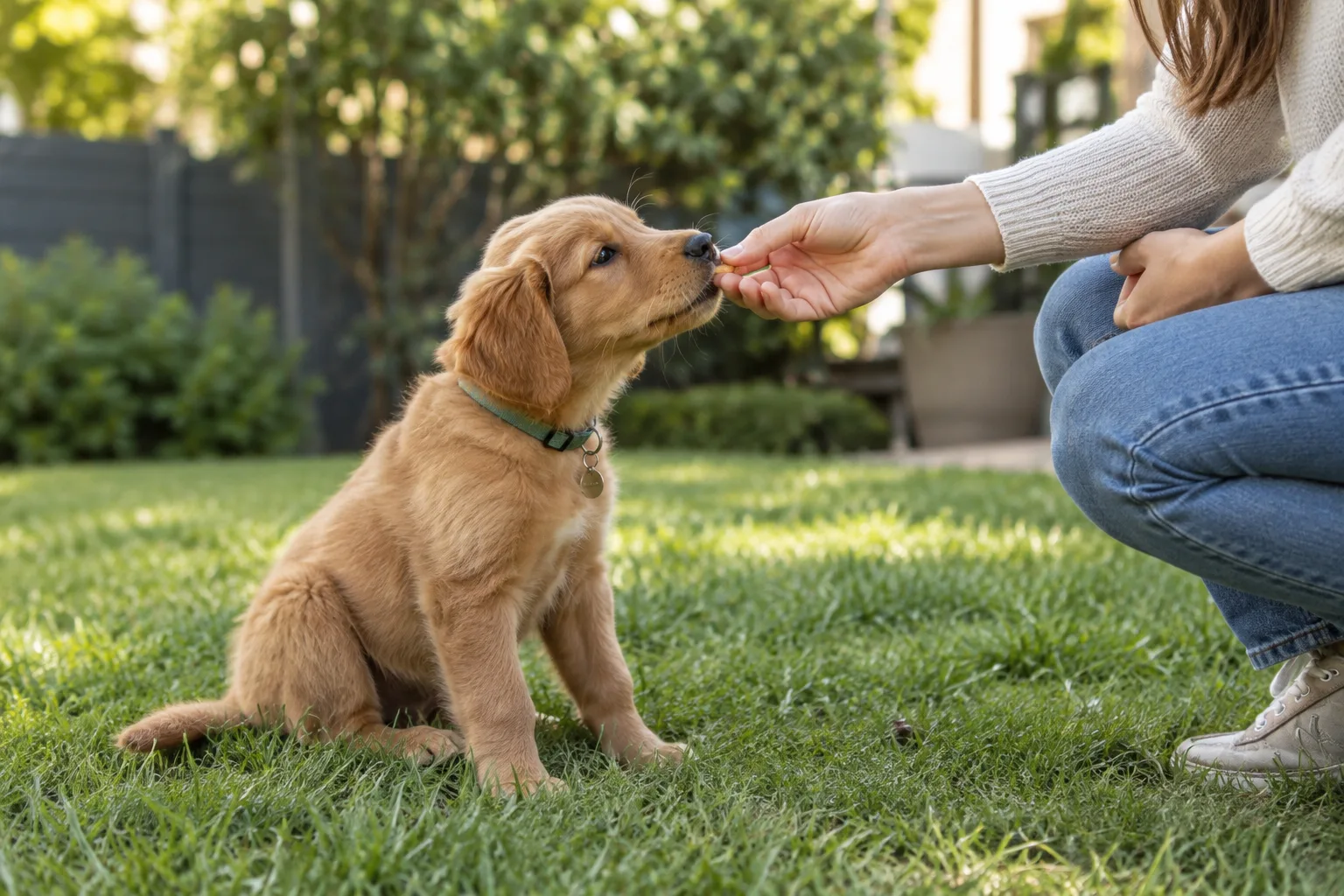
Toilet training is about making the right choice easy and rewarding it immediately. Take your puppy to the chosen spot after waking, eating, drinking or playing, and before bed. Accidents are part of learning. Scolding may teach a puppy to hide when they need to go, rather than showing them where to go.
Choose a place and keep your cue consistent
Use a safe, accessible area and accompany your puppy. Young dogs are easily distracted, so give them a little time. You can say a short cue as they begin to toilet, without repeating it insistently. As soon as they finish, praise and offer a small reward right there. A reward back indoors may be linked to something else instead.
Before using public areas visited by dogs of unknown health status, ask your vet what is appropriate for your puppy’s vaccination stage and local disease risk. If a temporary indoor option is necessary, keep it consistent and plan how you will later move the habit to the intended place.
Watch patterns, not just the clock
Sniffing, circling, stopping play or moving away can mean a toilet trip is needed. For the first few days, note when your puppy eats, sleeps and toilets. That record helps you anticipate their needs better than a fixed rule for every puppy. Gradually lengthen the interval only when they are succeeding and comfortable.
If an accident starts in front of you, calmly guide the puppy to their toilet place if possible. If it has already happened, clean it thoroughly and continue the routine. Never rub their nose in it or punish them. Ask whether too much time passed, the routine changed or they became overexcited.
When to call the vet
Seek veterinary advice if urination seems painful, you see blood, drinking or urination changes markedly, diarrhoea develops, or a puppy who had been progressing suddenly regresses. Not every accident is a training issue. Fit toilet breaks into a daily routine and build other skills through reward-based puppy training.
Sources consulted
This guide provides general information. If your pet has symptoms, pain or a sudden change in behaviour, speak to a veterinarian. Read our editorial policy.