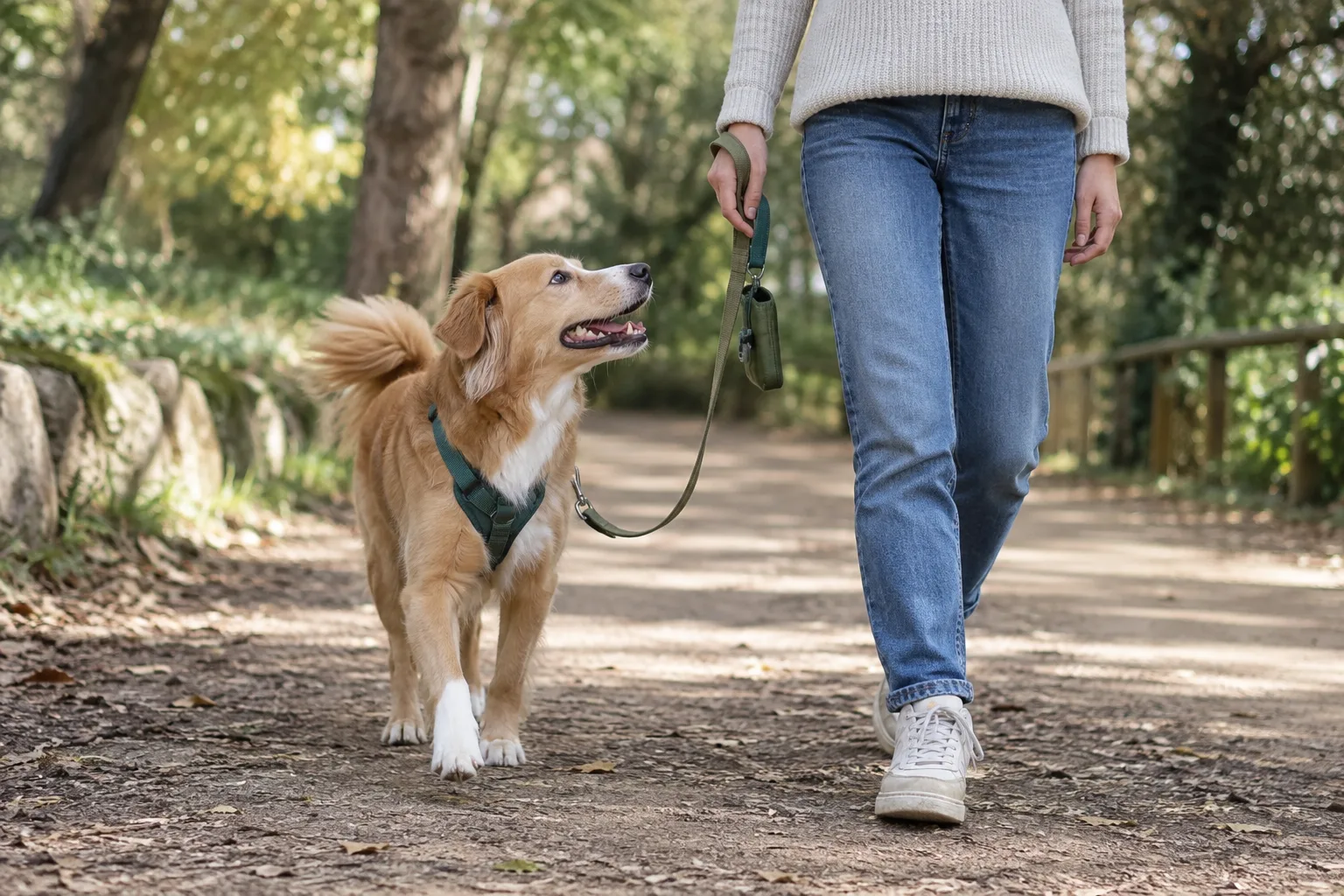
Teach your dog that walking forward happens when the leash is loose. Start where there are few distractions, reward steps near you and pause when the leash tightens. Move again when your dog comes back or releases the tension. The goal is a safe, comfortable walk, not constant heelwork.
Practise before the difficult walk
Check that the harness or collar fits and does not cause pain. Bring rewards your dog likes and choose a quiet route. Take a step or two; while the leash stays loose, mark success and reward. Build distance gradually. At first, you may need to reward often because matching a person’s pace can be difficult for a dog.
When the dog pulls, stop without yanking back. Invite them towards you and resume once the leash is loose. If the surroundings are too exciting for your dog to respond, move farther from the distraction or finish practice there. A short session with successes is better than a long walk rehearsing the pull.
Make room for sniffing
A walk is also a chance to explore. A cue such as ‘go sniff’ can let your dog investigate a safe spot without rushing. Alternate training sections with sniffing breaks; our scent-game ideas offer more ways to use the nose.
If your dog pulls mainly when they see dogs, bicycles or people, consider whether fear, excitement or frustration is involved. Give them space, do not force greetings and watch their body language. Loose-leash practice alone may not address the emotion behind the pull.
When to seek help
If your dog could pull you over, barks or lunges at triggers, or changes behaviour suddenly, consult a vet to check for pain and ask a qualified reward-based professional for help. Leash jerks and aversive collars are not a substitute for training. The principles in our puppy-training guide also apply to adult dogs.
Sources consulted
This guide provides general information. If your pet has symptoms, pain or a sudden change in behaviour, speak to a veterinarian. Read our editorial policy.