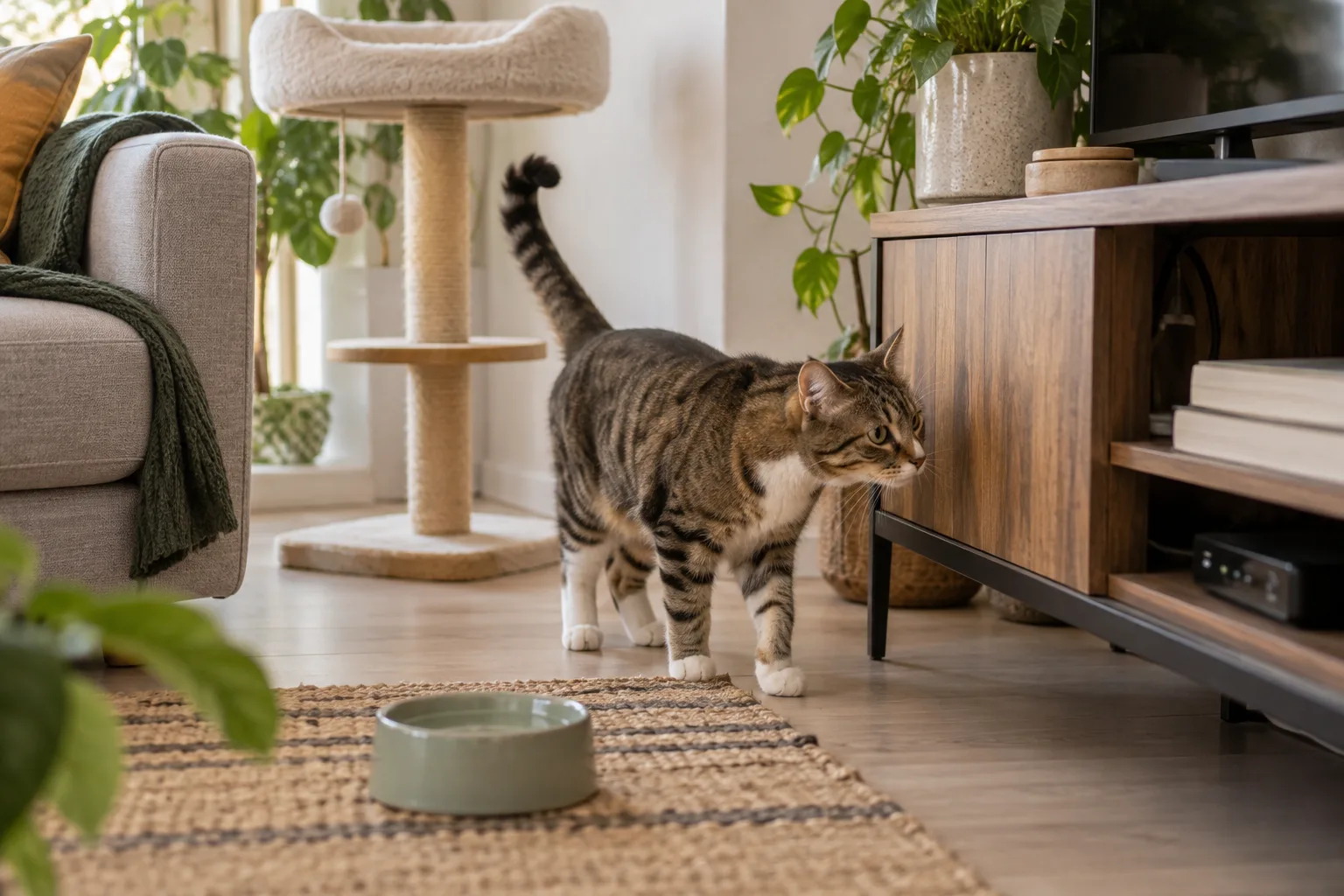
Prepare one room first, rather than trying to make the entire home available immediately. A new cat can orient themselves more easily when their essentials are close by and they have somewhere private to hide. Safety and placement matter more than buying a long list of accessories.
Set up a welcome room
Choose a quiet room you can close temporarily. Offer a box or covered resting spot, a blanket, a scratching surface and a few simple toys. Put fresh water and food in one area and the litter box well away from them. If you know the food and litter the cat has been using, have those ready. Familiar smells and textures can make the change gentler.
A hiding place should be safe and reachable in an emergency. A cardboard box with an opening is easier to manage than a gap behind a washing machine. Limit strong scents, visitors and unnecessary noise while your cat settles.
Check hazards from a cat’s point of view
Secure windows and balconies before opening the rest of the home. Store cleaning products, medication, thread, string, rubber bands and small items a cat could chew or swallow. Tidy loose cords and check appliances and cupboards before closing their doors. Review houseplants too: some familiar plants are toxic to cats. The ASPCA plant list can help identify specific species; remove an uncertain plant until you have checked it.
Think ahead about where essentials will stay once your cat explores. A litter box behind a door that is often shut is not truly accessible. A water bowl in a noisy walkway may be ignored. In a multi-cat home, place resources separately so one animal cannot guard them all.
Essentials and optional extras
Have a secure carrier, age-appropriate complete cat food, easy-to-clean bowls, a litter box, litter, scratching surface and refuge. You can choose a larger cat tree or more elaborate toys after learning what your cat likes. There is no need to redesign every room at once.
When your cat arrives, open the carrier in the prepared room and let them set the pace. Expand their territory after they are eating, using the litter box and exploring with confidence. The first-day guide covers that next stage. Once the room is ready, follow the first-day plan for an adopted cat as you open the carrier and begin the settling-in period.
Sources consulted
This guide provides general information. If your pet has symptoms, pain or a sudden change in behaviour, speak to a veterinarian. Read our editorial policy.