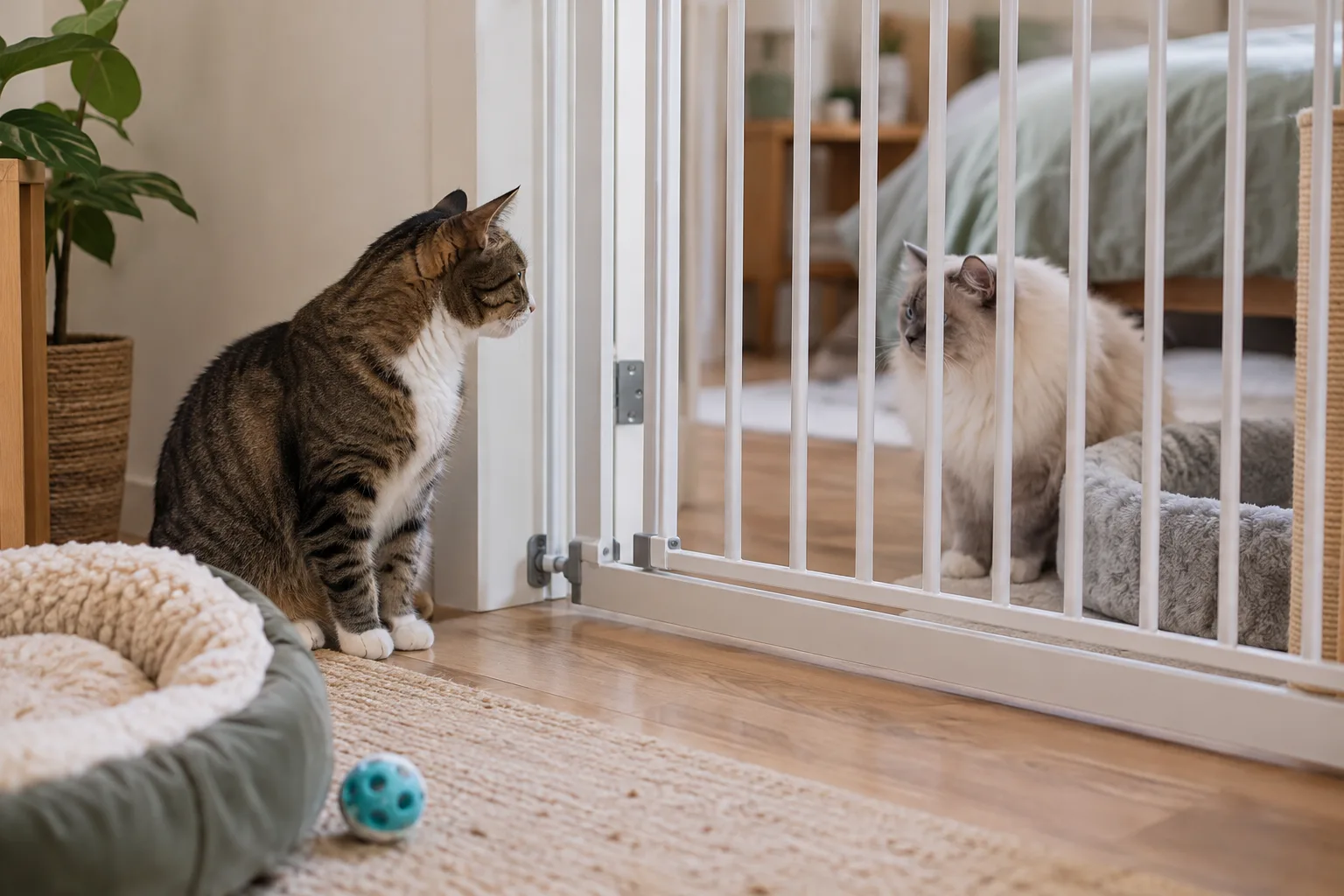
Do not put two unfamiliar cats together as soon as the newcomer arrives. A gradual introduction lets each cat learn about the other without losing access to food, resting places or escape routes. Their reactions, rather than a fixed schedule, determine when to move forward.
Stage one: separate spaces
Set up the new cat in a room with water, food, litter box, refuge and scratching surface. Keep the resident cat’s routine and favourite places intact. Both should be able to eat and rest without passing one another. Do not hold a cat in front of the other or push their carriers together.
Once both are calm, exchange blankets or cloths carrying their scent. Watch whether each investigates quietly or withdraws tensely. You can also let them explore areas the other has used, taking turns so they do not meet. The purpose is familiarity, not a strong reaction.
Stage two: brief visual contact
When both cats continue to eat, play and use their litter boxes normally, allow a short view through a secure barrier. Keep enough distance and finish while they remain comfortable. Persistent staring, a rigid posture, repeated hissing or blocking access tells you to step back. Do not punish hissing; it communicates discomfort.
Stage three: supervised time together
Allow brief meetings with multiple routes out and raised resting places. Spread essentials across the home. Cats Protection suggests one of each key resource per cat plus one extra, in separate locations. Two food bowls side by side can still become one contested feeding area.
The first goal is peaceful coexistence, not sleeping together. Some cats tolerate one another without forming a close bond. If there are fights, injuries, litter-box avoidance, persistent fear or appetite changes, separate them and consult a veterinarian or qualified feline behaviour professional. Forcing another meeting after conflict can make future introductions harder. During every meeting, use the guide to cat body language to notice early signs that either cat needs more distance.
Sources consulted
This guide provides general information. If your pet has symptoms, pain or a sudden change in behaviour, speak to a veterinarian. Read our editorial policy.