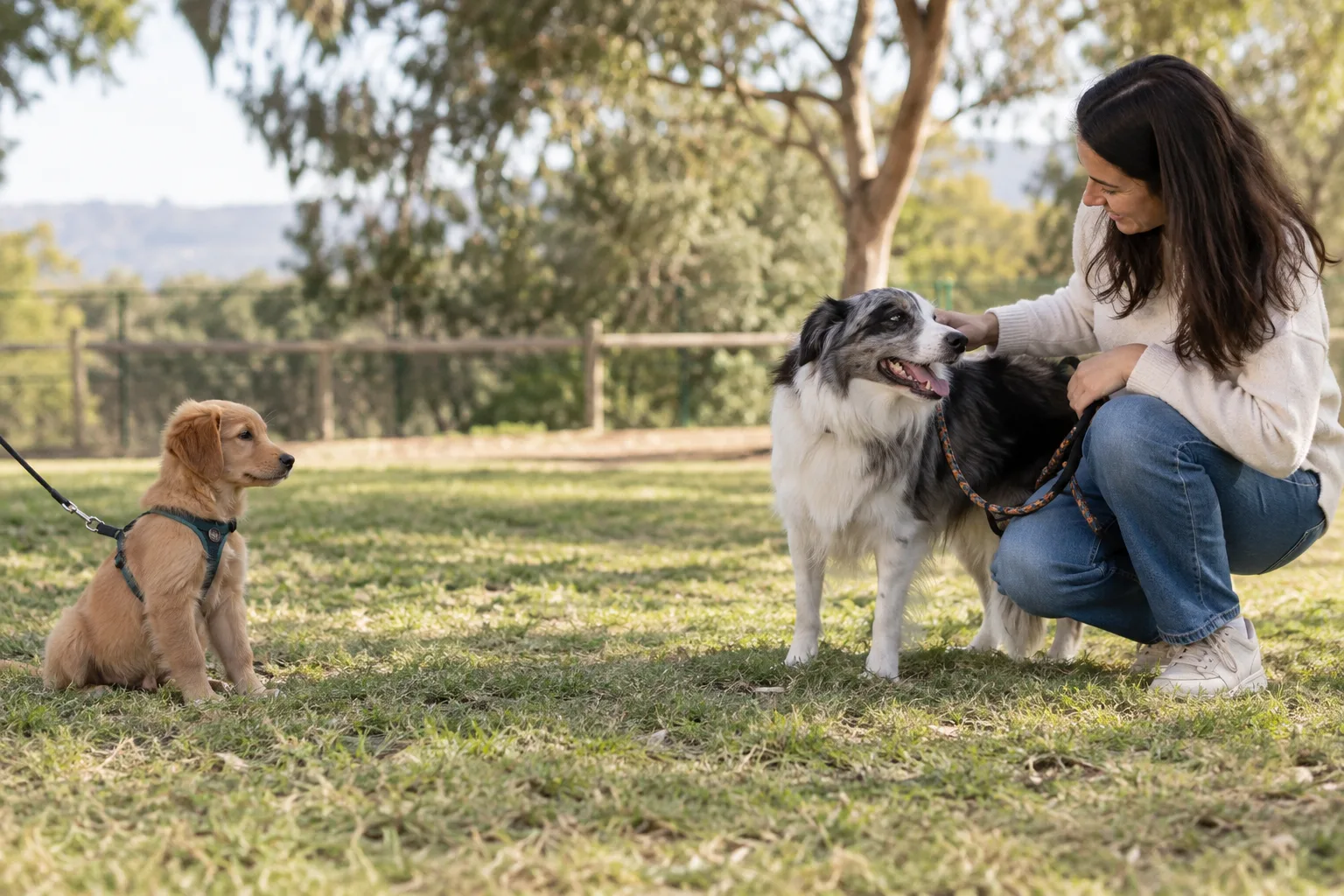
Socialising a puppy means offering new experiences they can explore safely. It is not a contest to meet as many dogs and people as possible. Watch body language, allow distance and reward calm, voluntary investigation.
Start with everyday life
At home, introduce different safe surfaces, quiet household sounds, ordinary objects and people who respect your puppy’s space. Let them approach if they choose. A calm visitor who allows sniffing and retreat is more useful than a series of people passing the puppy around. Change one feature at a time so you can see what feels easy and what needs more time.
Outside, choose controlled encounters over crowded places. A well-run puppy class may provide useful experiences if it checks vaccination and health status and uses reward-based methods. Ask your vet which outings and contacts are safe before the vaccination course is complete; the answer depends on local disease risk. Avoid dirty or heavily used areas frequented by dogs of unknown health status.
Notice when the experience is too much
If your puppy stops taking treats, freezes, tries to leave, pants without being hot, repeatedly licks their lips or hides, increase the distance and let them recover. Do not force them to confront the thing they fear. Try an easier version another day. Canine body language helps you assess the whole body and the situation, not one signal alone.
Socialisation continues as a dog grows. Positive experiences throughout life help maintain confidence. Adult dogs can learn too, although their plan should reflect their history and any fears.
If your puppy is already frightened
If a sound or person triggers an intense reaction, do not repeat the exposure hoping they will simply get used to it. Speak to your vet, particularly if fear limits everyday activities. They can refer you to a qualified behaviour professional. See help for dogs afraid of noise for one specific problem. Keep new experiences within gradual reward-based training and stop before your puppy becomes overwhelmed.
Sources consulted
This guide provides general information. If your pet has symptoms, pain or a sudden change in behaviour, speak to a veterinarian. Read our editorial policy.