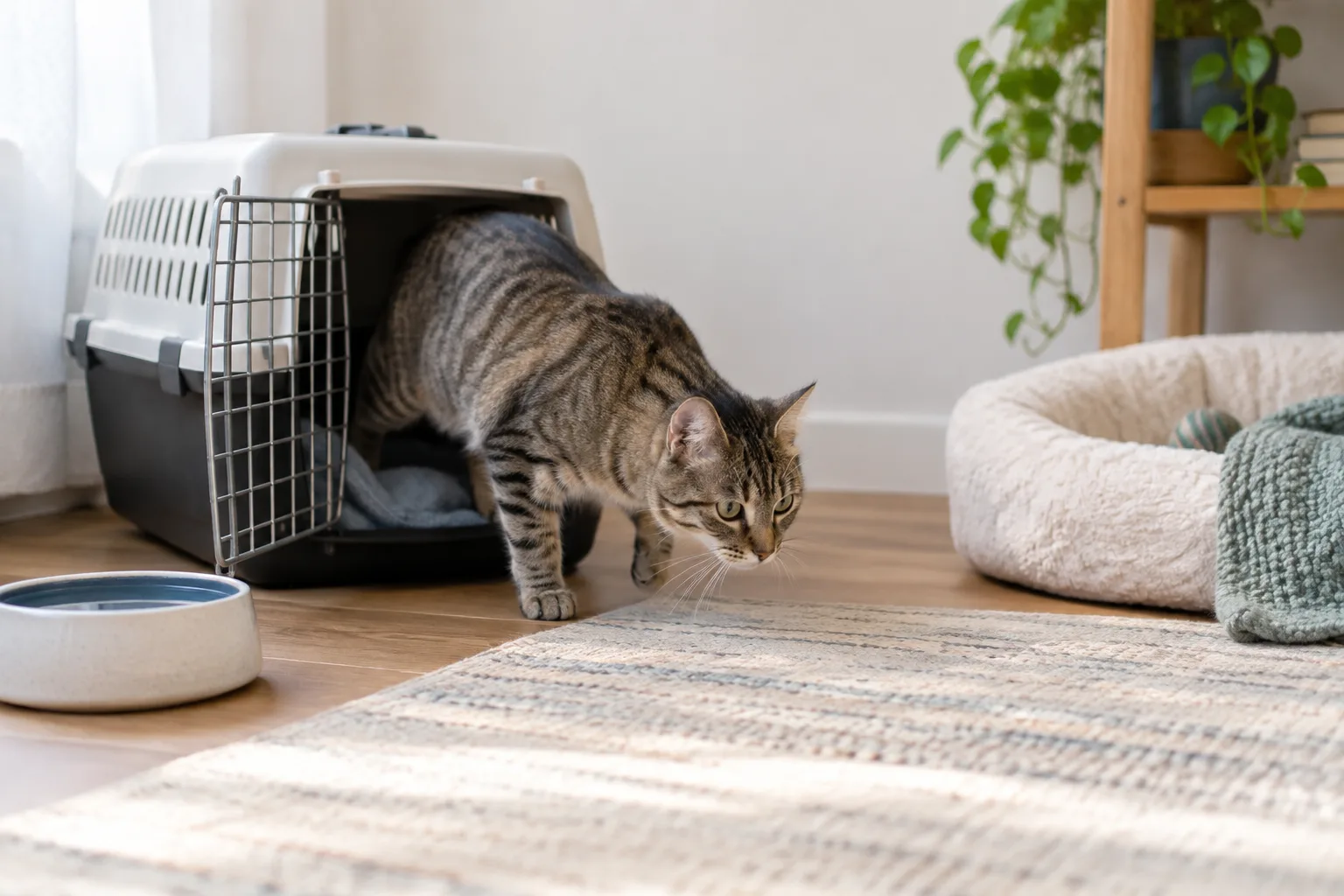
A quiet welcome is usually the kindest one. Open the carrier in a calm room and let your cat decide when to come out. They do not need to meet every person or explore the whole home on day one. They need water, food, a litter box and a place to hide without being watched closely.
Before opening the carrier
Choose a room you can keep peaceful. Add a bed or blanket, a cardboard hiding box, a scratching post and a safe raised resting place if available. Keep the litter box away from food and water. Secure windows, remove accessible cords and make sure nobody will open the door unexpectedly. Keep other pets elsewhere for now.
Ask the rescue what food and litter your cat used before. Keeping these familiar during the transition avoids several changes at once. If you received a blanket carrying familiar scents, leave it in the room. Arrange a veterinary check according to the adoption records and advice you received; seek help sooner if your cat seems unwell.
The first hours and night
Put the open carrier on the floor and step back. You may sit quietly and speak softly, but do not pull the cat out or pass them from person to person. Some explore at once; others wait for a silent house. Either can be normal.
Check discreetly whether food has been eaten, water drunk and the litter box used. Record what you notice without chasing your cat. Keep the same safe room overnight. If they approach, let them sniff your hand and decide whether to interact. A brief play session can help when they show interest.
When to offer more space
Once your cat is eating, using the litter box and exploring their room calmly, open another area gradually while keeping the original refuge available. There is no universal timetable. Explain to children that hiding means the cat needs space. Introducing a resident cat requires its own slow process.
When to seek help
Hiding can be part of settling in, but contact a veterinarian if your cat is not eating, appears painful, vomits repeatedly, struggles to urinate or seems to be getting worse. Ask for advice if fear persists without small signs of progress. Do not assume every change is simply moving stress; illness can also look like withdrawal. For a cat who remains hidden, use our guide to a new cat hiding to track progress without forcing contact.
Sources consulted
This guide provides general information. If your pet has symptoms, pain or a sudden change in behaviour, speak to a veterinarian. Read our editorial policy.