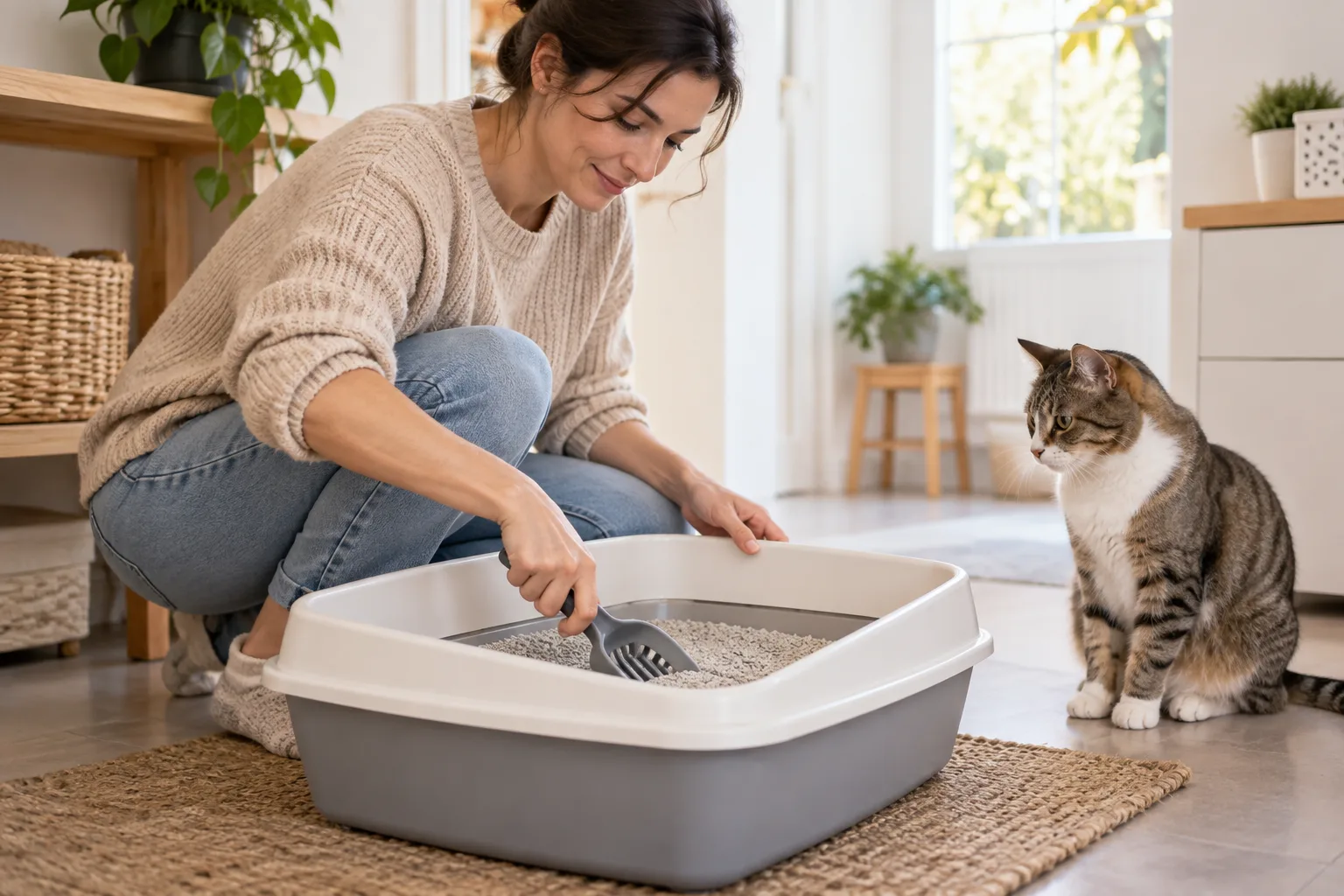
As a starting point, remove urine and faeces twice daily and wash the whole tray at least once a week. This follows Cats Protection’s practical guidance, but adjust for the number of cats and boxes, the type of litter and your cat’s preferences. If the tray is already wet or smells, clean it sooner.
A daily routine
Use a scoop suited to the litter and remove visible deposits. Clumping litter makes wet areas easier to take out without emptying the whole box. Top it up if the level has fallen. Notice major changes in the amount or appearance of urine or stool; these details may help a veterinarian.
Wash your hands afterwards and follow local disposal rules. Do not leave waste in an open bin beside the box. Extra boxes in separate areas can reduce crowding in a multi-cat home, but they still need regular cleaning.
A thorough clean
Empty the litter, wash with hot water and mild soap or a cat-safe cleaner, rinse thoroughly and dry before refilling. Avoid heavy perfume. A smell that seems pleasant to you may deter your cat. Inspect the edges and surface: a cracked or deeply scratched box may be hard to clean and worth replacing.
How often all litter needs replacing depends on the material. Some allow daily removal of clumps; others need a more frequent full change. Follow the product instructions while paying attention to actual cleanliness and the cat’s response. Covered boxes can hold smells and may need extra care.
If your cat needs a cleaner box
Some cats will not use a tray until deposits are removed. If yours begins looking elsewhere, scoop more often and provide another clean option. Do not punish an accident. If elimination outside the tray is new, or you notice pain, blood, straining or repeated attempts without urine, seek veterinary care. More cleaning alone will not solve urinary disease.
A short, consistent routine is easier to maintain than waiting for one large cleaning session. Keep your supplies where you can reach them promptly. For a sudden refusal despite a clean tray, use the checks in cat not using the litter box.
Sources consulted
This guide provides general information. If your pet has symptoms, pain or a sudden change in behaviour, speak to a veterinarian. Read our editorial policy.