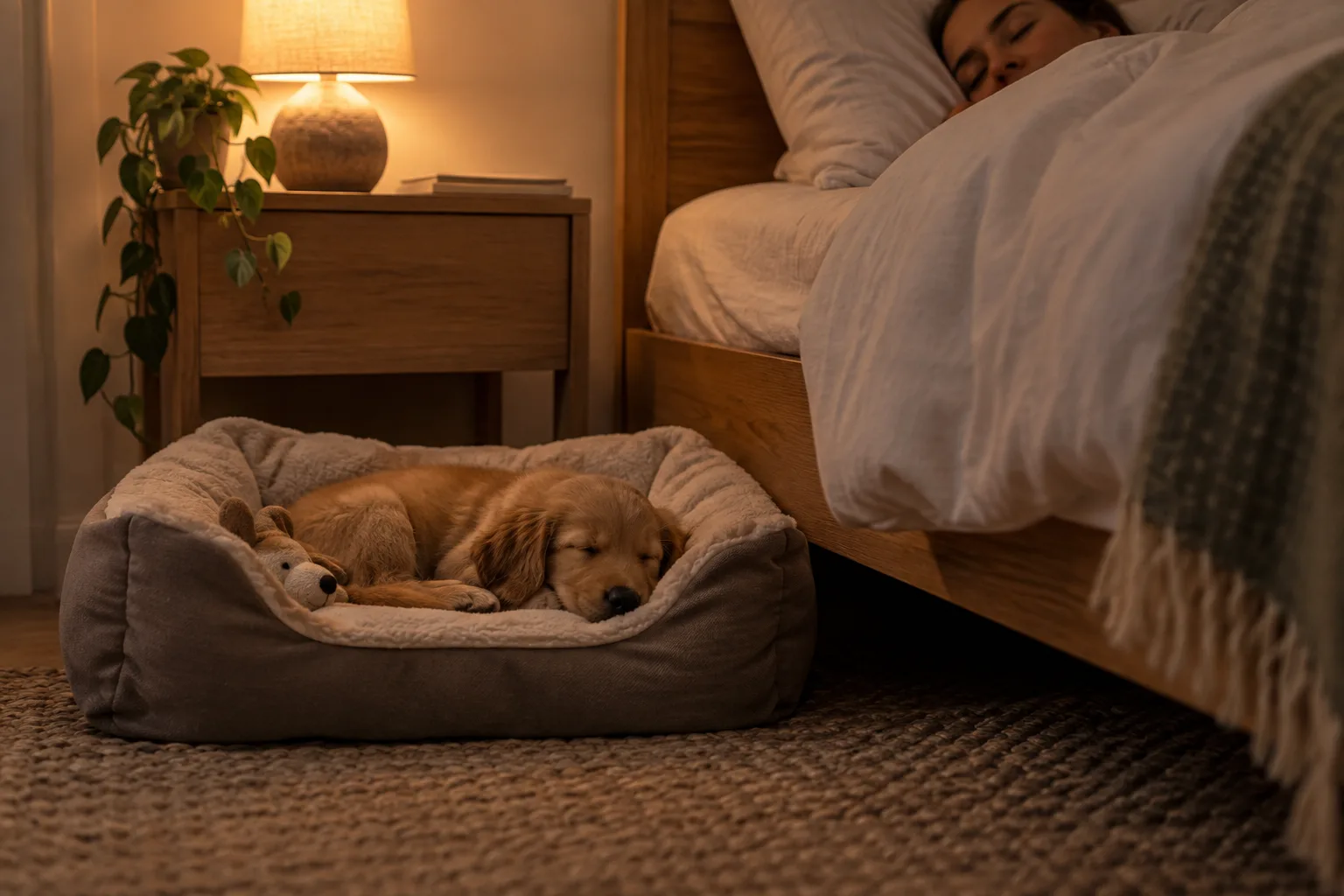
If your puppy cries at night, go and check what they need. They may be adjusting to sleeping away from their mother and littermates, need a toilet break or feel uncomfortable. Comforting a frightened puppy does not spoil their training; feeling safe helps them settle.
Check the basics first
Make sure the bed is comfortable, the room temperature is suitable and water is available. Offer a brief trip to the toilet area, particularly after your puppy wakes. Keep it low-key: toilet, quiet praise and back to bed rather than an exciting nighttime game.
If your puppy has eaten something new, vomits, has diarrhoea, seems painful or behaves unusually, contact a vet. Illness can disrupt sleep too.
Build a familiar bedtime routine
During the day, alternate gentle play, chances to sniff and plenty of rest. Avoid a frantic game just before bedtime. Offer a final toilet opportunity and follow the same calm sequence each evening, such as dimmer lights and time by their bed.
It may help for someone to sleep near the puppy for the first nights. If you eventually want them to sleep elsewhere, increase the distance gradually and watch how they respond. A familiar-smelling blanket may be comforting, provided they cannot tear off and swallow pieces.
If the crying starts again
Approach without anger. Check toileting and comfort, speak softly and give your puppy time to calm down. If they cannot cope with a step towards sleeping alone, return to a stage where they can rest. Leaving a puppy in prolonged distress is not a useful lesson in independence.
Keep a short record of sleeping, meals and toilet breaks. It can reveal whether the crying follows a need to go out or difficulty being alone. Use the daily routine guide to organise daytime care. If fear of being alone persists beyond the initial adjustment, particularly with panting, destruction or escape attempts, speak to your vet. Our separation-problem guide explains what to observe.
Sources consulted
This guide provides general information. If your pet has symptoms, pain or a sudden change in behaviour, speak to a veterinarian. Read our editorial policy.