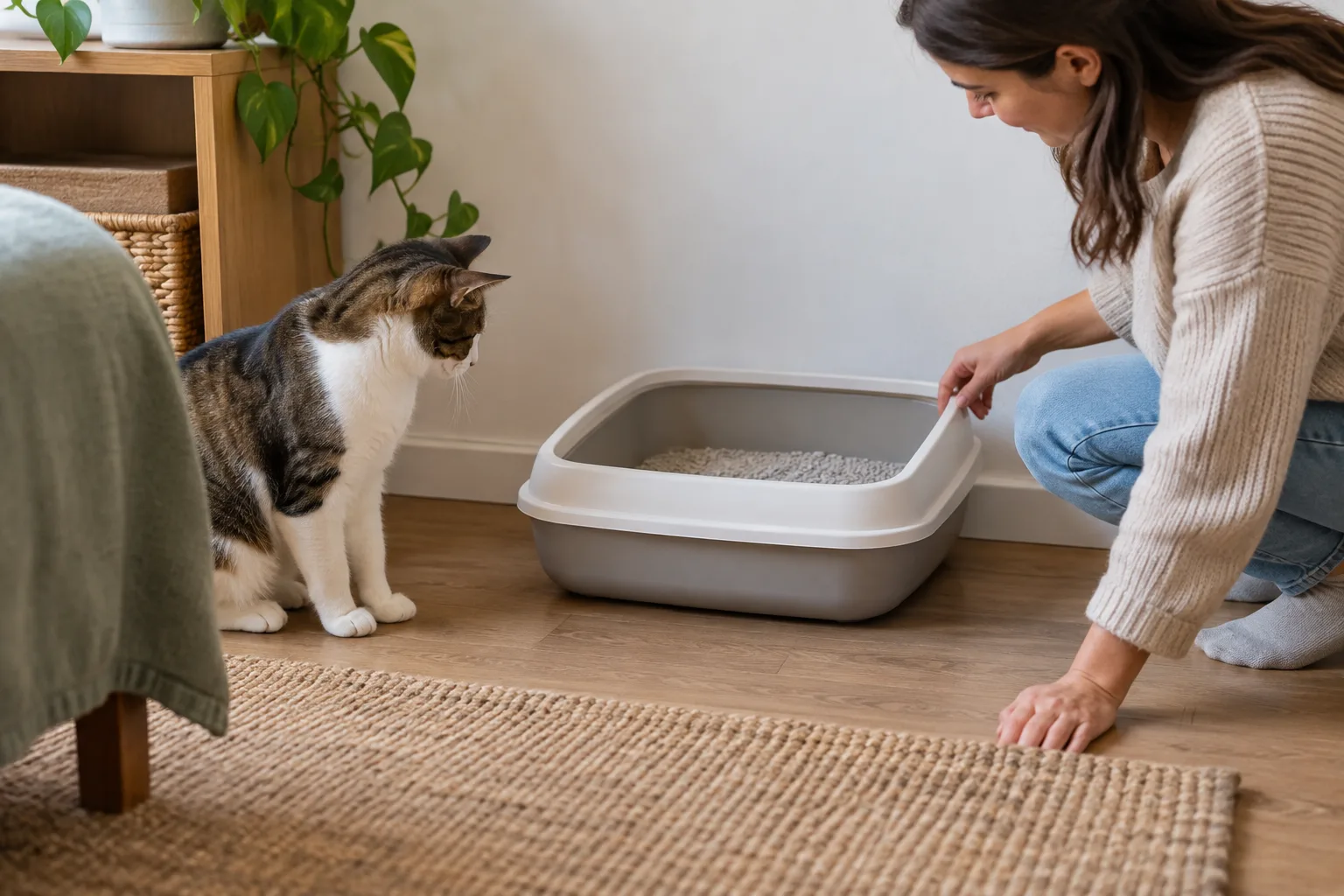
If your cat stops using the litter box, do not treat it as disobedience. Urinating or defecating may hurt, the tray may be uncomfortable, or the location may no longer feel safe. Check for signs of illness first, then review what changed around the box.
Spot an emergency
A cat repeatedly entering the box, straining without producing urine, crying in pain, licking the genital area or becoming lethargic needs urgent veterinary attention. A urinary blockage can be life-threatening. Call a veterinarian for blood, very frequent attempts or a sudden change even if your cat still seems active.
Joint pain, bowel problems and other conditions may also make a tray difficult to use. Tell the veterinarian whether urine or stool is involved, when it began, how much is passed and whether appetite or activity has changed. An early check can prevent weeks of guessing.
Inspect the box and surroundings
Once medical causes have been addressed, ask whether the box was moved, a noisy appliance started nearby, a different or scented litter was added, or another animal can block access. Make sure the tray is clean, spacious enough to turn in and easy to enter. Provide alternatives in separate locations if you have several cats.
Clean soiled places with a product suitable for the surface and safe for animals. Avoid strong scents and ammonia. Do not carry the cat to the tray by force or punish them; this can make the place feel even less safe.
Make changes you can observe
When possible, change one thing at a time. You could add an open tray with unscented litter in a quiet area and see which box the cat chooses. Keep notes on the surface, place and time of accidents. They will help your veterinarian or behaviour professional if the issue continues.
There may be several causes at once. A lasting solution protects both the cat’s health and their access to a clean, secure bathroom. Once urgent causes have been checked, review how to choose and set up a litter box before testing a different tray.
Sources consulted
This guide provides general information. If your pet has symptoms, pain or a sudden change in behaviour, speak to a veterinarian. Read our editorial policy.