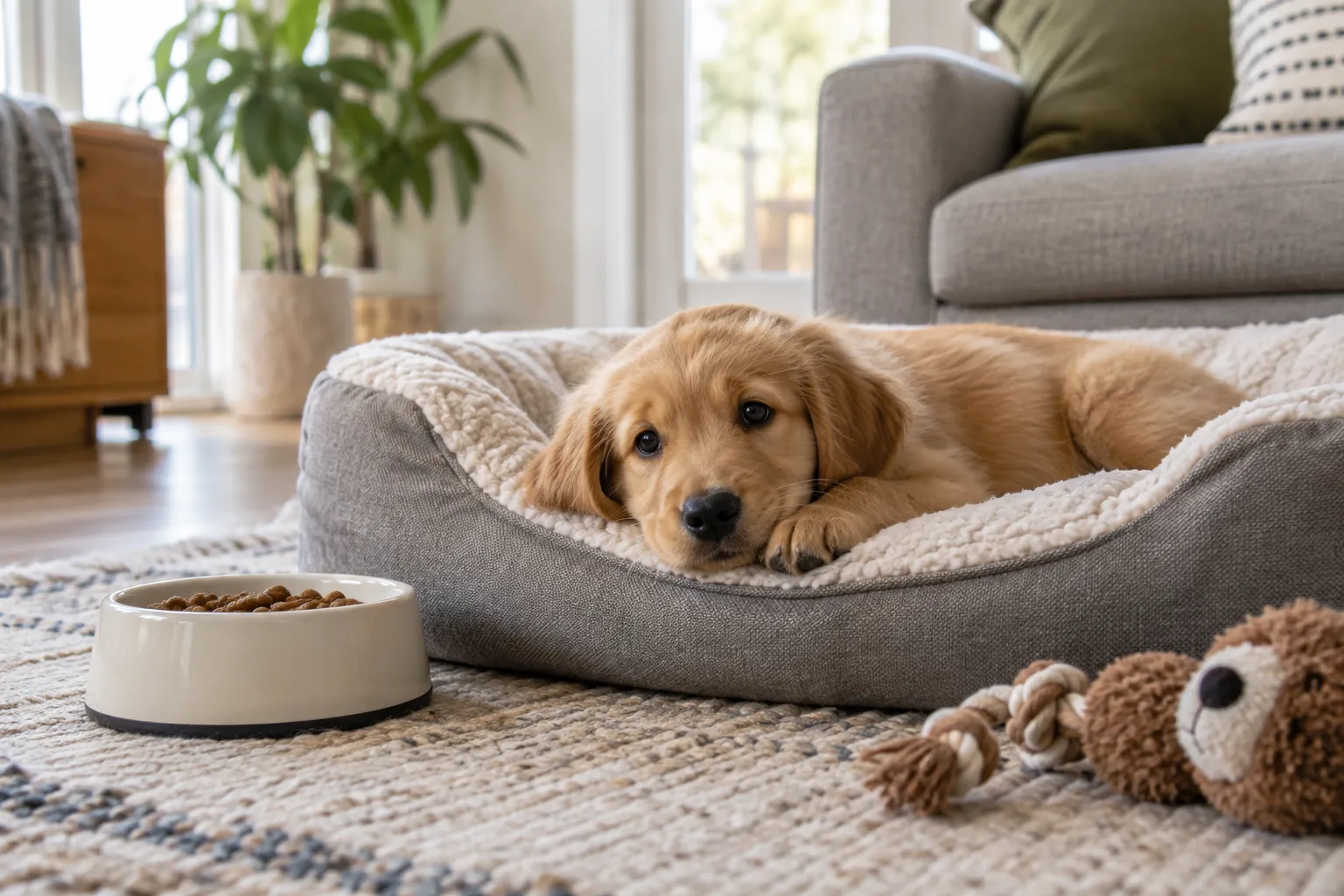
A puppy routine is a repeatable sequence, not a rigid timetable. After sleeping, eating or playing, offer a chance to toilet. Between those moments, your puppy needs safe exploration, very short training sessions and uninterrupted rest.
Think in blocks rather than exact times
A day might begin with waking and a toilet break, followed by a meal according to the food label and veterinary advice, a little play or exploration, another toilet opportunity and a nap. Repeat and adjust the sequence for your puppy’s age, health and energy. When they first arrive, keep their familiar mealtimes where possible.
Puppies vary in how long they can wait before toileting. Watch for sniffing the floor, circling or wandering away from play. Accidents will happen while they learn. Clean up without punishment and consider offering more opportunities. The toilet-training guide gives a step-by-step approach.
Allow enough rest
Puppies need plenty of naps. If yours gets overexcited, mouths more or cannot concentrate, a quiet break may help more than extra activity. Protect their sleeping space and ask children and visitors not to disturb them.
Between naps, try brief games and simple skills: responding to their name, coming towards you or touching your hand. Reward what you want to see again. Puppy training starts with small successes, not long drills.
Plan new experiences safely
Socialisation can start at home with gentle exposure to everyday sounds, surfaces and people. Ask your vet which places and contacts are safe before the vaccination course is complete; reducing infection risk does not mean avoiding every new experience. Our socialisation guide explains how to introduce things gradually.
For a few days, note sleep, meals, toilet trips and difficult moments. If your puppy becomes unusually quiet, stops eating, has diarrhoea or changes behaviour suddenly, contact a vet rather than assuming the routine is the problem. Agree on a consistent approach with everyone who cares for them.
Sources consulted
This guide provides general information. If your pet has symptoms, pain or a sudden change in behaviour, speak to a veterinarian. Read our editorial policy.