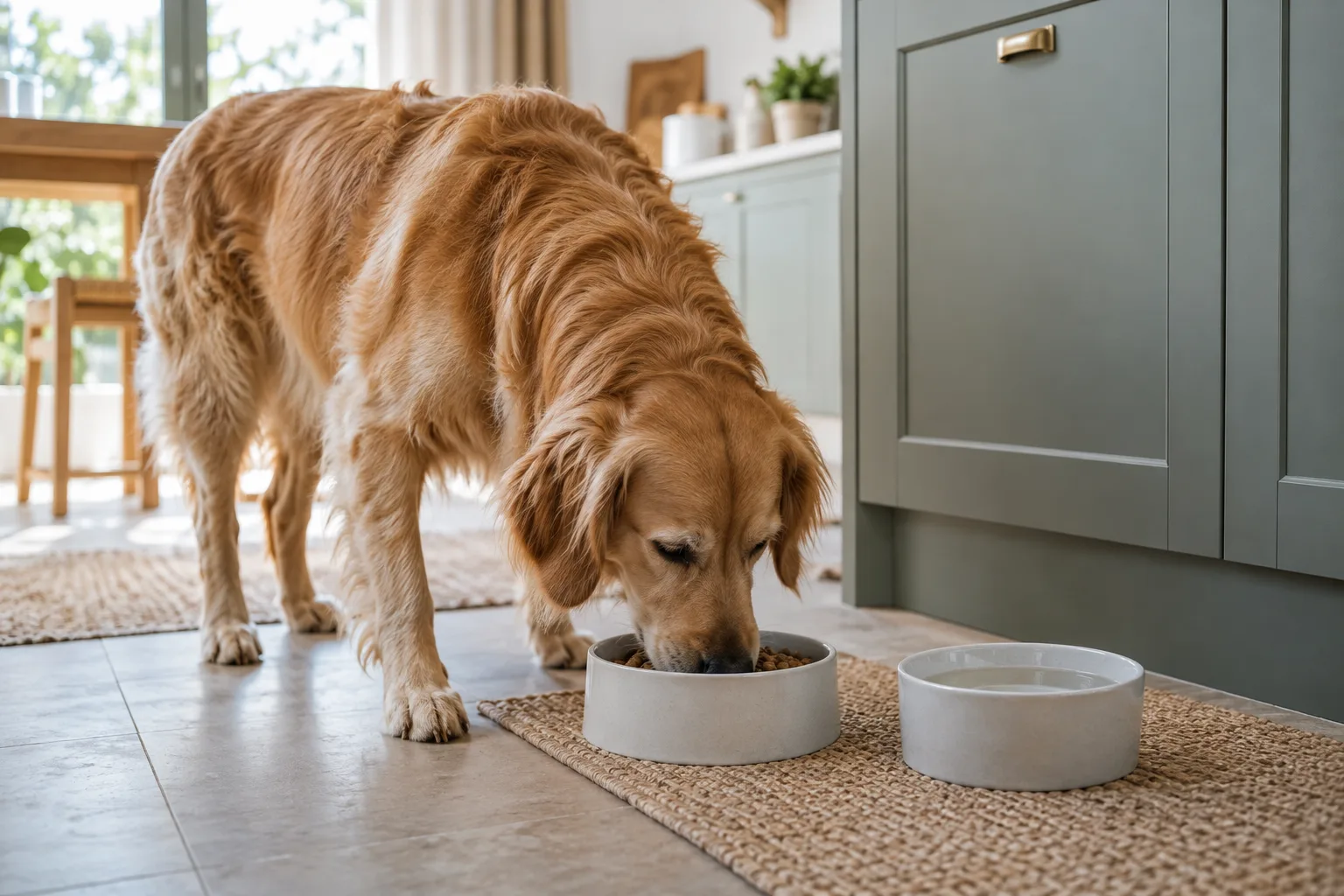
Most of a dog’s diet should be a complete food suited to their life stage and individual needs. Some foods from our kitchens can be offered in small amounts as treats, but being safe for people does not make an ingredient safe for dogs. Preparation and added ingredients matter too.
Foods that may work as occasional treats
ASPCA lists options such as carrot, plain cooked green beans, small pieces of apple without core or seeds, blueberries, strawberries and banana. Wash produce, cut it into pieces that are unlikely to cause choking and offer only a little when trying something new. Dogs do not all tolerate foods equally. If vomiting or diarrhoea follows, stop offering it and seek advice if symptoms continue.
Human meals may contain onion, garlic, salt, fat, bones or sweeteners. A simple, unseasoned ingredient is easier to assess than a prepared dish. Treats, including fruit, should remain a small part of daily intake so they do not displace nutrients from complete food. If your dog has a medical condition, allergy or prescribed diet, ask your vet before adding extras.
Foods to keep out of reach
Do not offer grapes or raisins, chocolate, products containing xylitol, onions, garlic, alcohol or macadamia nuts. Bones can cause injury or blockage; very fatty or salty leftovers carry other risks. See foods toxic to dogs for the most important exposures and what to do.
If you think your dog ate something hazardous, contact a vet promptly. Keep the packaging and note what was eaten, how much and when. Do not wait for symptoms or induce vomiting unless a veterinary professional instructs you to.
Choosing the main diet
Look for a product labelled complete for your dog’s life stage. Check its energy content and ask how it was formulated. Marketing words and ingredient-list length alone do not establish nutritional quality. Our guide to choosing dog food explains the WSAVA questions to ask. For a puppy who has just arrived, discuss changes to the familiar diet with your vet as part of the first-day plan.
Sources consulted
This guide provides general information. If your pet has symptoms, pain or a sudden change in behaviour, speak to a veterinarian. Read our editorial policy.