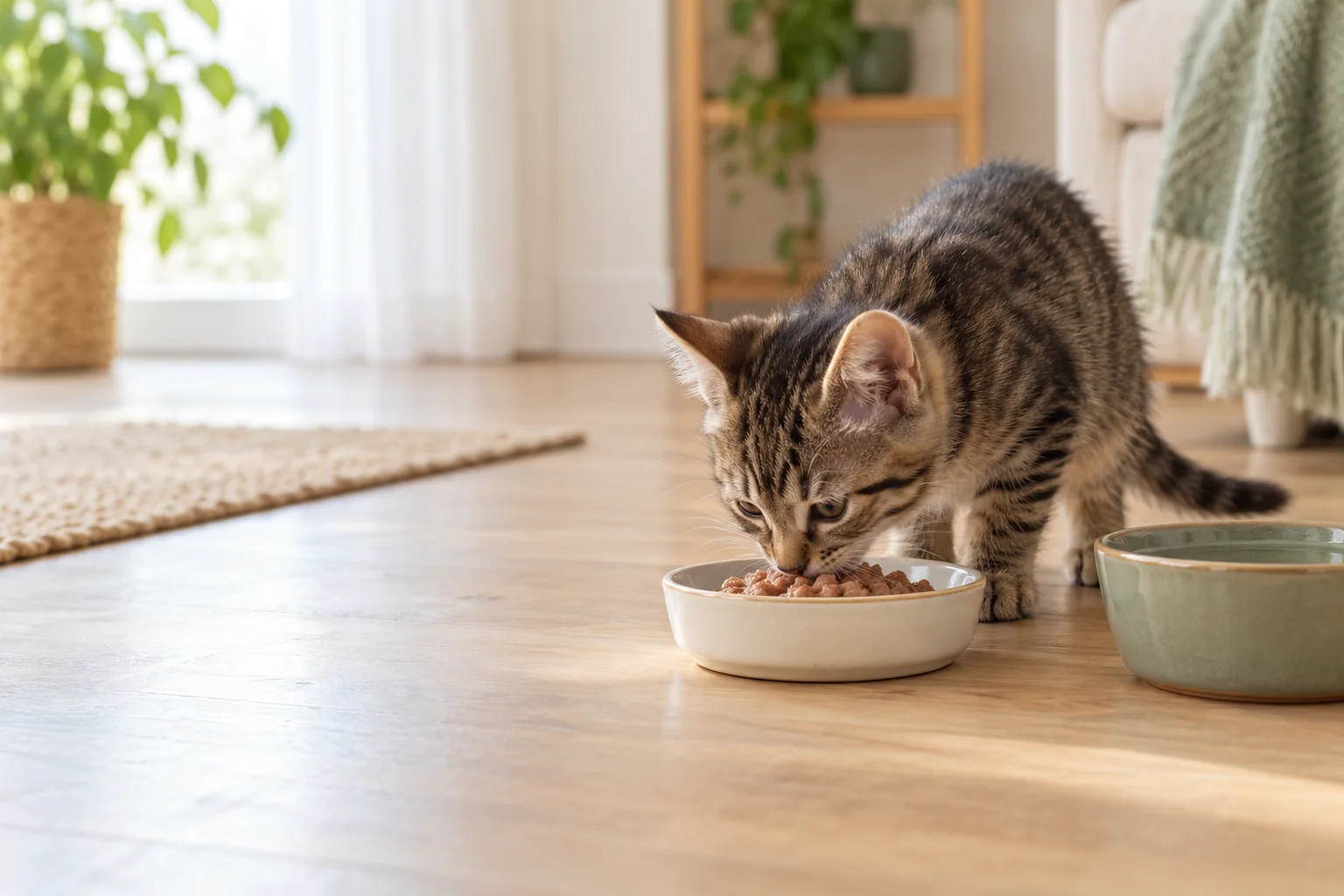
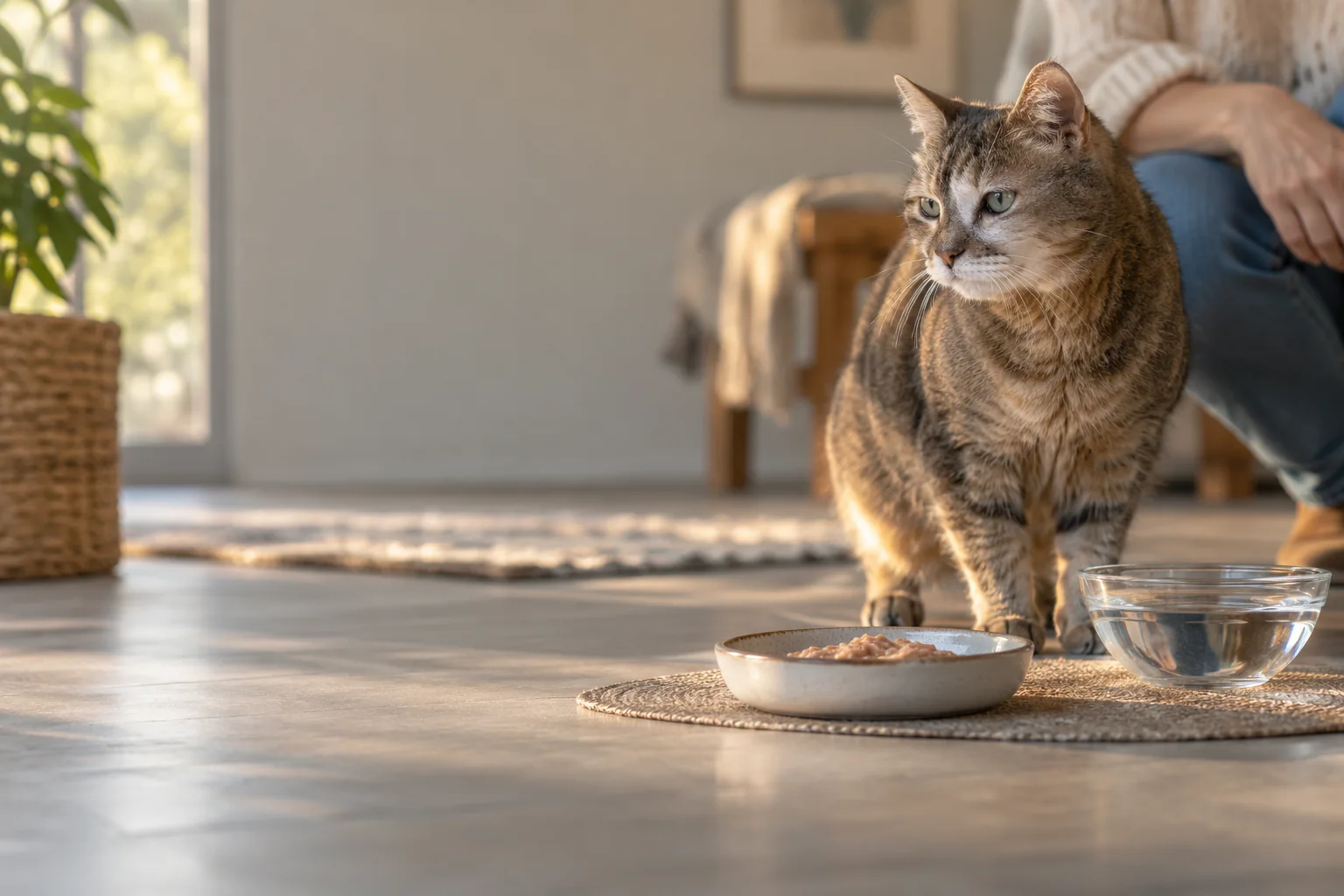
Persian
A predisposition to weight gain has been reported.
Measure portions and assess the body beneath the coat.Nutrition · Cats
Start with a complete cat food matched to life stage. Then consider body condition, appetite, water intake and any health changes. A breed label alone cannot make that assessment for you.
01 / Nutrition guidance table
Dog food does not meet feline needs. Read the adequacy statement and assess your cat before choosing.
| Stage | What to offer | Watch for |
|---|---|---|
| 01Growing kitten | Complete growth food and fresh water at all times. | Weight gain and appetite; adult transition is often around 8–12 months. |
| 02Healthy adult | Complete maintenance food: wet, dry or a measured mix. | Portion, body condition and access to water. |
| 03Senior | Individual plan guided by weight, muscle, appetite, teeth and disease. | Do not restrict protein or calories automatically because of age. |
| 04Illness or pregnancy | Veterinary assessment and food appropriate to the situation. | Therapeutic and reproductive diets need specific guidance. |
HelloLazo / In context
Persian and Norwegian forest cats are among breeds reported as predisposed to weight gain. That supports careful body-condition monitoring, not one special recipe for every cat of those breeds. Age, neutering, activity and illness are often more useful day-to-day factors.
Breed / Size
Breed may signal a risk, but it cannot replace tracking weight, muscle and body condition.
A predisposition to weight gain has been reported.
Measure portions and assess the body beneath the coat.Also listed in clinical guidance on overweight risk.
Follow weight and condition rather than prescribing one breed diet.Age, neutering, activity and health still shape the plan.
Choose complete food and observe the individual response.02 / Three bowl checks
Check the nutritional adequacy statement. Meat alone, tuna or dog food is not a substitute for complete cat food.
Provide fresh water at all times. Wet food can increase total water intake but does not replace water bowls.
Start with a measured amount and adjust to weight and body condition. Keep treats and extras around 10% of calories or less.
An informed choice
Home-prepared or raw diets need more checks than a complete food matched to life stage.
Many published recipes are not complete and balanced. For a regular home-prepared diet, obtain a formula from a board-certified veterinary nutritionist and follow it exactly.
AAHA ↗The FDA has found a higher risk of disease-causing bacteria in raw pet food. Ask about safe alternatives and avoid improvising, especially for puppies and kittens.
FDA ↗03 / Choose your path
Keep exploring
HelloLazo / Library
Choose complete cat food, understand the limited role of treats and recognise foods you should keep away from your cat.
Read guide ↗Nutrition · CatsCompare water content, storage, portions and individual preferences when choosing wet food, dry food or both.
Read guide ↗04 / Evidence
General information for healthy animals. Illness, weight loss, poor appetite or a therapeutic diet calls for individual veterinary advice. Editorial policy.