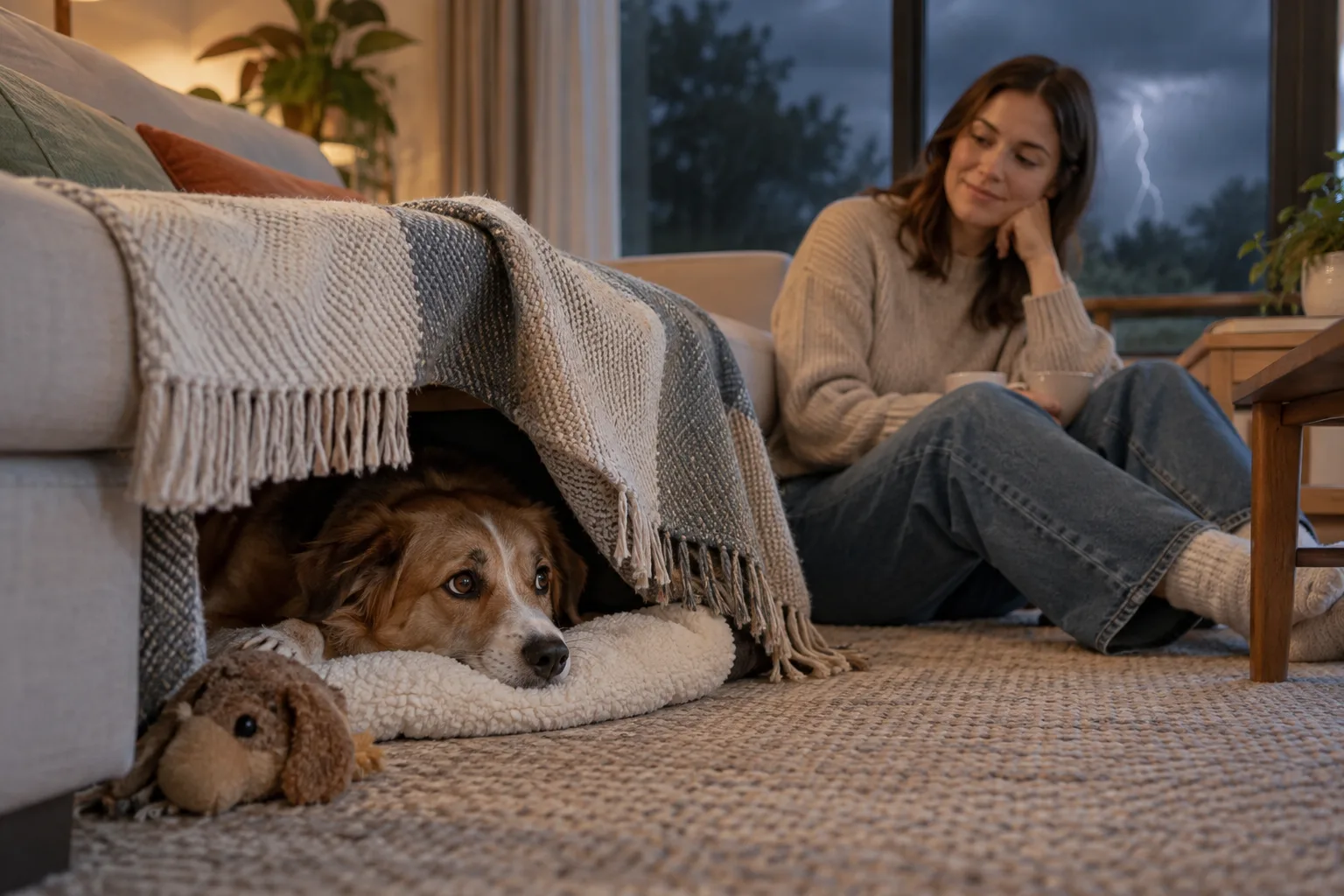
When a loud noise is already happening, focus on helping your dog feel safe. Let them use a familiar hiding place, reduce outside sound and light where possible, and stay nearby if they seek company. Do not drag them out of hiding or take them to a fireworks display to ‘get used to it’.
Prepare before a predictable event
Choose an indoor room or corner where your dog already rests. Put their bed, water and familiar items there. Close windows and curtains if that helps. Moderate background sound may mask some outside noise if your dog is comfortable with it. Check doors, windows and identification details; a frightened dog may try to escape.
If fireworks are expected, walk and offer a toilet break before they begin. Use a well-fitting harness or collar and leash if you must go out during the noise. During an unexpected storm, avoid an unnecessary outing if panic or escape is likely.
Let your dog choose during the noise
Some dogs seek contact; others prefer to hide. Follow their preference. Offer food or a quiet game if they want it, without insisting. If your dog trembles, pants, paces or stops responding, reduce demands. Our body-language guide helps recognise less obvious stress signals.
Do not punish barking or hiding. Playing a loud recording while the dog is already frightened is not a helpful training session.
Make a longer-term plan
Speak to a vet if fear is intense, worsening or disrupting daily life. They can assess possible pain or other health factors and advise on behaviour support or treatment. Sound recordings, when appropriate, must begin at a level that does not cause fear and progress slowly; rushing can make the response worse. A qualified professional can adapt the plan.
For puppies, introduce everyday sounds gently within gradual socialisation. Prevention means positive and safe experiences, never forced exposure. Prepare before the next predictable noisy date so there is time to create a safe space and ask for help.
Sources consulted
This guide provides general information. If your pet has symptoms, pain or a sudden change in behaviour, speak to a veterinarian. Read our editorial policy.