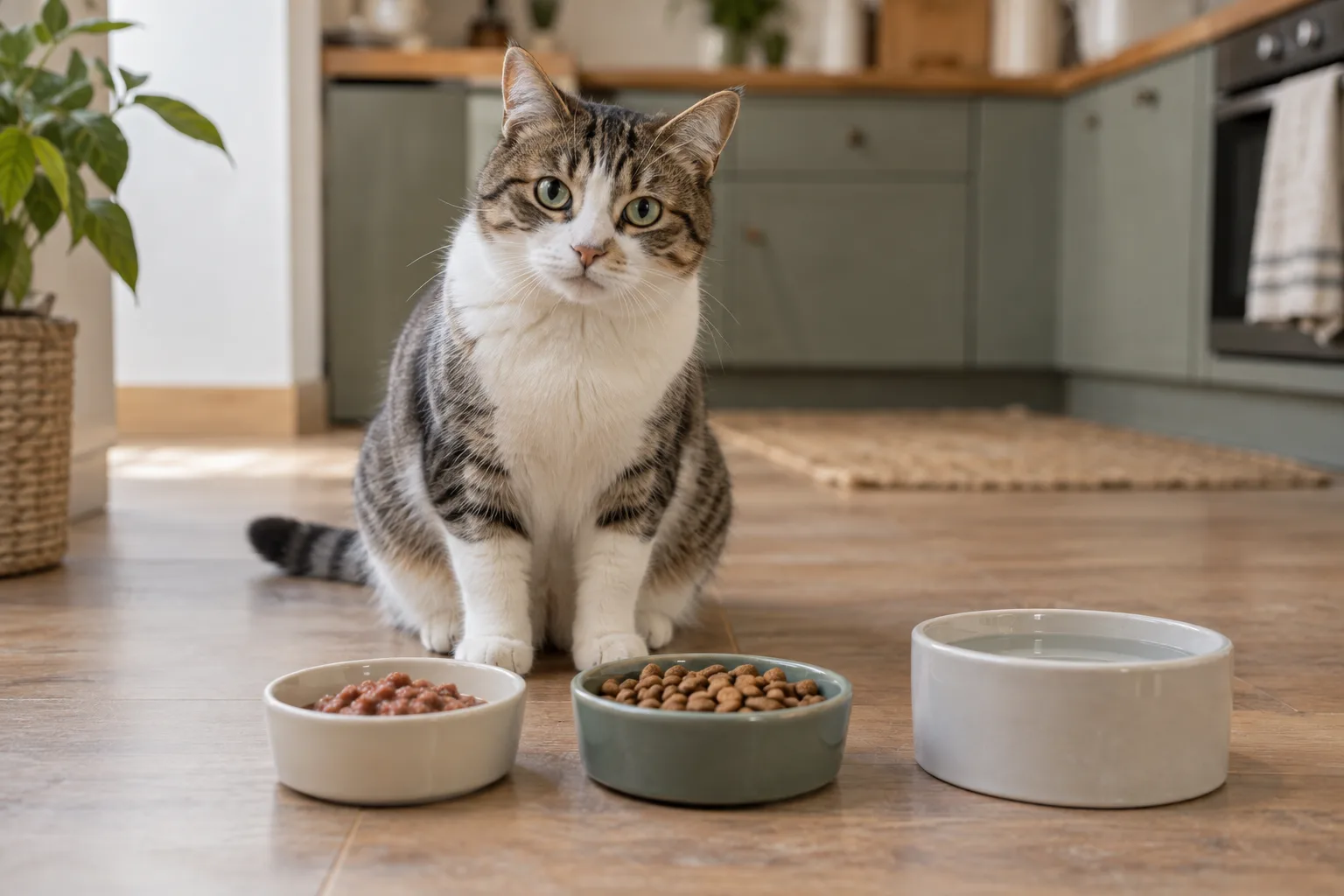
There is no best format for every cat. Wet and dry food can both meet feline needs when the product is complete and balanced for the cat’s life stage. Wet food contributes more water; dry food is often easier to store and serve. Health, preference and total daily intake also matter.
Water and texture
Wet food contains considerably more water than dry food. Cornell explains that it can contribute to hydration, although cats eating wet food still need access to fresh water. Cats eating only dry food usually obtain more water by drinking. Follow your veterinarian’s individual advice if they have recommended a particular diet or more water intake.
Some cats prefer one texture. Dry kibble can work in food puzzles; wet food may be easier for a cat who struggles to chew. However, possible dental pain needs a veterinary check. Do not switch textures simply to hide a mouth problem.
Check the label before the format
Make sure the food says it is complete for your cat’s life stage. Some wet products are labelled complementary and are not meant to be the sole diet. Review feeding amounts, energy information and storage instructions. Refrigerate opened wet food as directed; keep dry food in a cool, dry place in a well-sealed container.
If you combine them
Do not serve a full daily ration of each format: that would add two menus together. Work out how much each contributes and adjust the total using label guidance and veterinary advice. Monitor weight and body condition. A combination may suit your cat, but it is not mandatory.
Introduce food changes gradually when the cat is otherwise well. Ask for advice if vomiting, diarrhoea, refusal of food or a sudden drinking change appears. Kidney disease, urinary disease, diabetes and other conditions call for an individual nutritional plan. The useful test is simple: complete food, appropriate quantity, constant access to water and a choice your cat eats well. The wider guide to what cats can eat explains how a complete diet differs from occasional treats.
Sources consulted
This guide provides general information. If your pet has symptoms, pain or a sudden change in behaviour, speak to a veterinarian. Read our editorial policy.