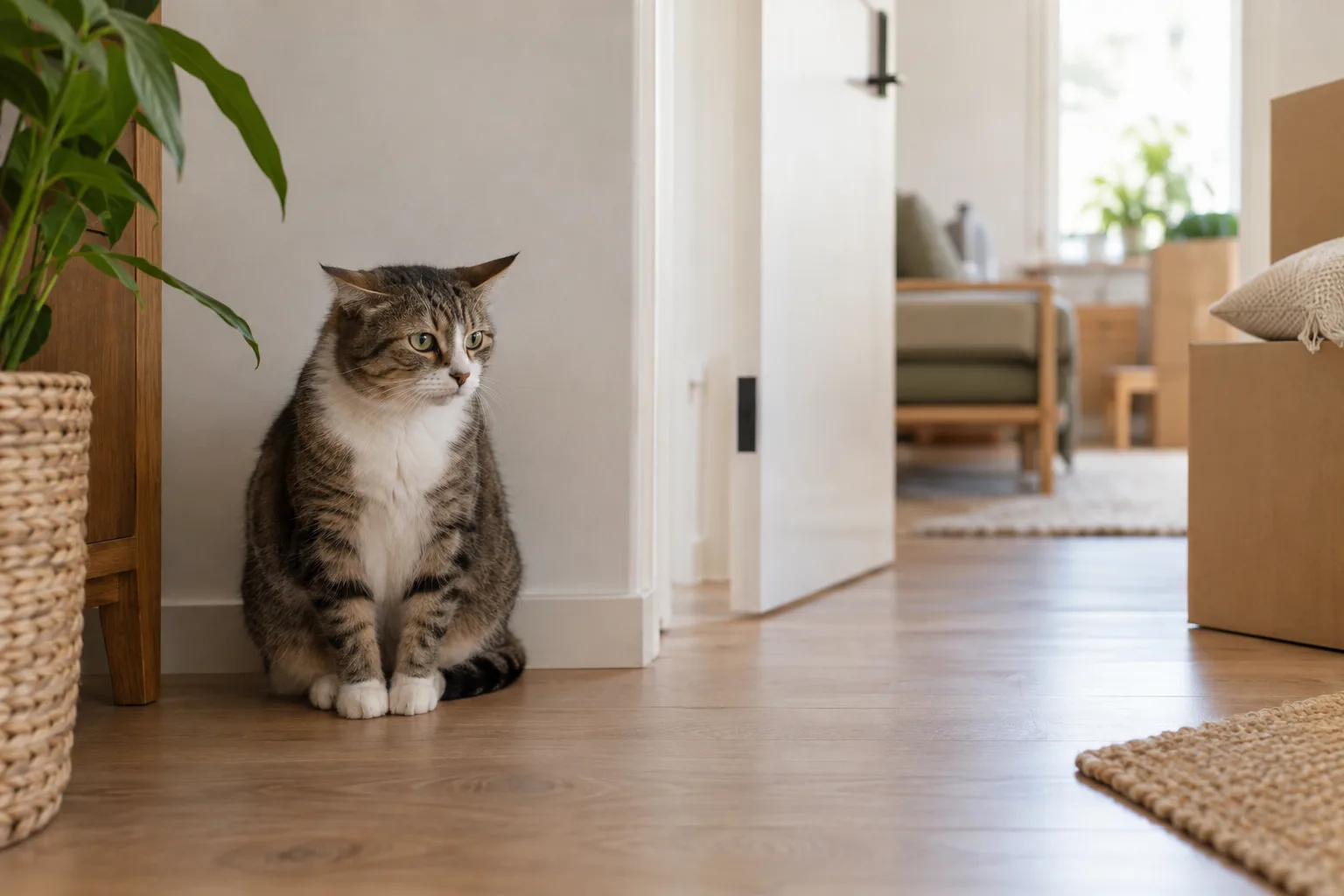
Stress often appears as a change from your cat’s usual behaviour: more hiding, avoiding people, unusual grooming, eating differently or no longer using the litter box. None of these signs proves that stress is the cause. Pain and illness can look similar, so a new or persistent change deserves veterinary advice.
Look for a pattern, not one pose
Note when the change began and what was happening at home: a move, building work, visitors, a new animal, a lost hiding place or a different litter. Check sleep, appetite, drinking and movement. During a particular event, crouching, ears back, wide pupils or attempts to flee can suggest the cat needs distance. If this posture persists without a clear trigger, look more carefully.
One cat may avoid an area because another cat silently blocks the route. Another may avoid the litter box because of noise or pain while urinating. The response depends on the cause. Do not describe elimination outside the box as revenge.
Reduce pressure and offer choices
Provide hiding and raised resting places, escape routes and easily reached resources. In multi-cat homes, spread food, water, litter boxes and beds apart. Keep routines predictable and let your cat initiate contact. A short game with a distant toy may help if they choose to join; do not force it.
Avoid punishment, shouting or chasing the cat from a refuge. Introduce new things gradually when possible. Judge an environmental change by what the cat does afterwards: do they eat better, explore and rest more comfortably?
When to get help
Seek veterinary care for reduced appetite, urinary changes, apparent pain, vomiting, lethargy or intense new behaviour. Straining to urinate is urgent. If medical causes have been excluded but fear or conflict continues, ask a qualified feline behaviour professional for help. Understanding the problem early is more useful than waiting for an avoidance pattern to become established. When the change involves toileting, the guide to a cat not using the litter box explains the medical and environmental checks.
Sources consulted
This guide provides general information. If your pet has symptoms, pain or a sudden change in behaviour, speak to a veterinarian. Read our editorial policy.