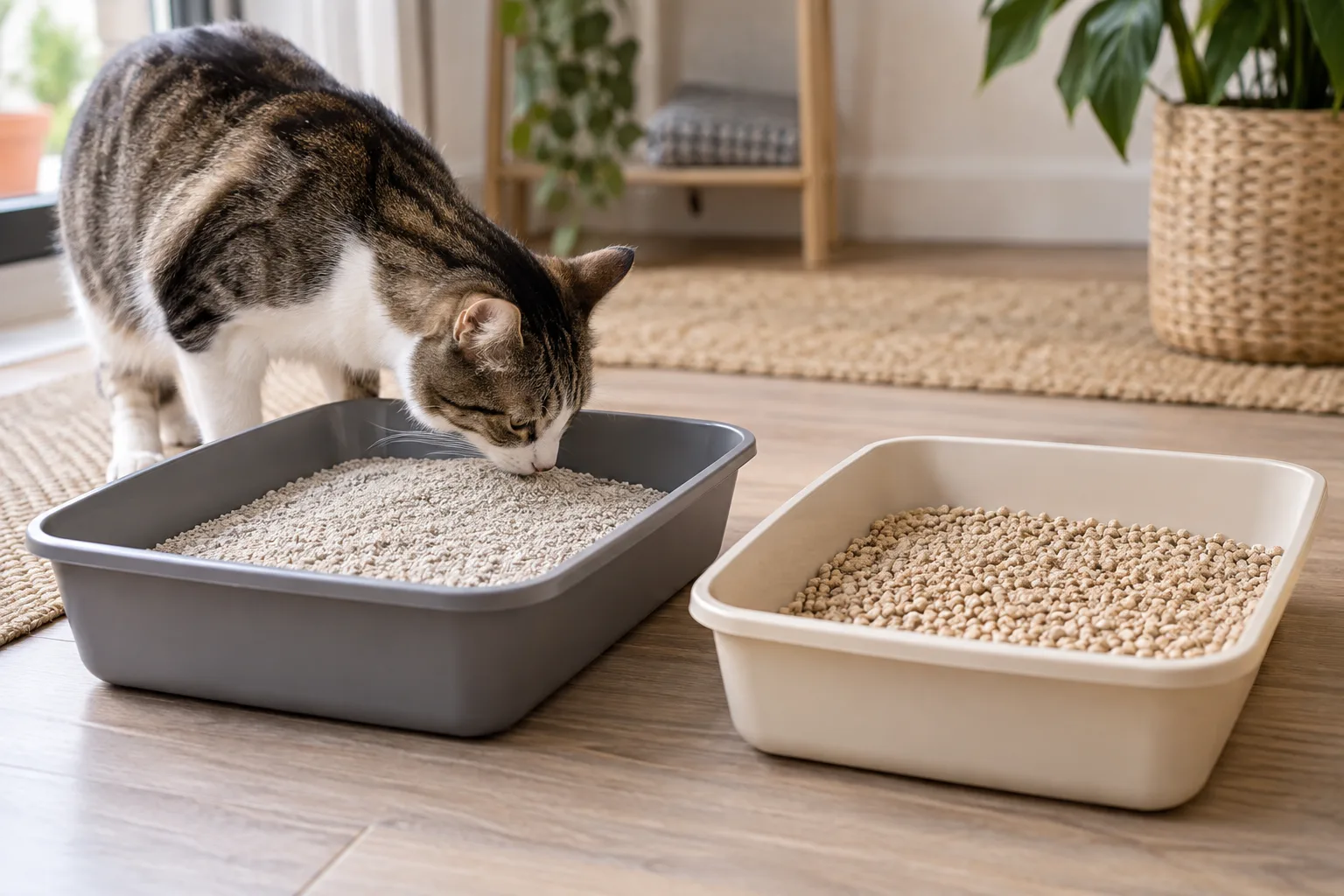
Start with litter your cat already knows and accepts. Then compare texture, dust, fragrance, ease of scooping and availability. A litter that controls odour well for people may still be heavily scented or uncomfortable under a cat’s paws.
Clumping and non-clumping
Clumping litter forms firm pieces when wet, making urine easier to remove with a scoop. Regular scooping helps keep the box usable between full changes. Products differ: some create more dust or track across the floor. Non-clumping litter absorbs without forming solid clumps. It can be simple to use but often needs closer attention to full replacement so dampness does not remain.
Plant-based and silica options
Plant-based litter may be made from wood, paper or other fibres. Grain size, absorbency and dust vary widely, so the label “plant-based” does not describe one uniform experience. Silica crystals absorb moisture differently and may last longer between changes according to the product, but some cats dislike their texture. Read the maker’s directions for use and disposal, particularly if environmental impact matters to you.
What the cat may prefer
Cats Protection notes that many cats like a fine, sand-like texture and advises against scented litter. Individual choice still decides. If your current litter works and you want to change it, offer a second box with the new material rather than swapping every box overnight. Watch where the cat enters, digs and eliminates comfortably.
Make a useful comparison
Compare the real cost over time, not only the bag price. Consider how much is discarded each day, whether the tray stays dry, whether the dust bothers you and whether the cat willingly uses it. No material removes the need to scoop waste and wash the box.
If your cat rejects the box after a litter change, offer the previous material again and check other causes. Sudden avoidance can coincide with pain or a urinary problem; straining, blood or inability to urinate needs prompt veterinary attention. If the cat avoids the box even after restoring the old litter, follow the checks for a cat not using the litter box.
Sources consulted
This guide provides general information. If your pet has symptoms, pain or a sudden change in behaviour, speak to a veterinarian. Read our editorial policy.