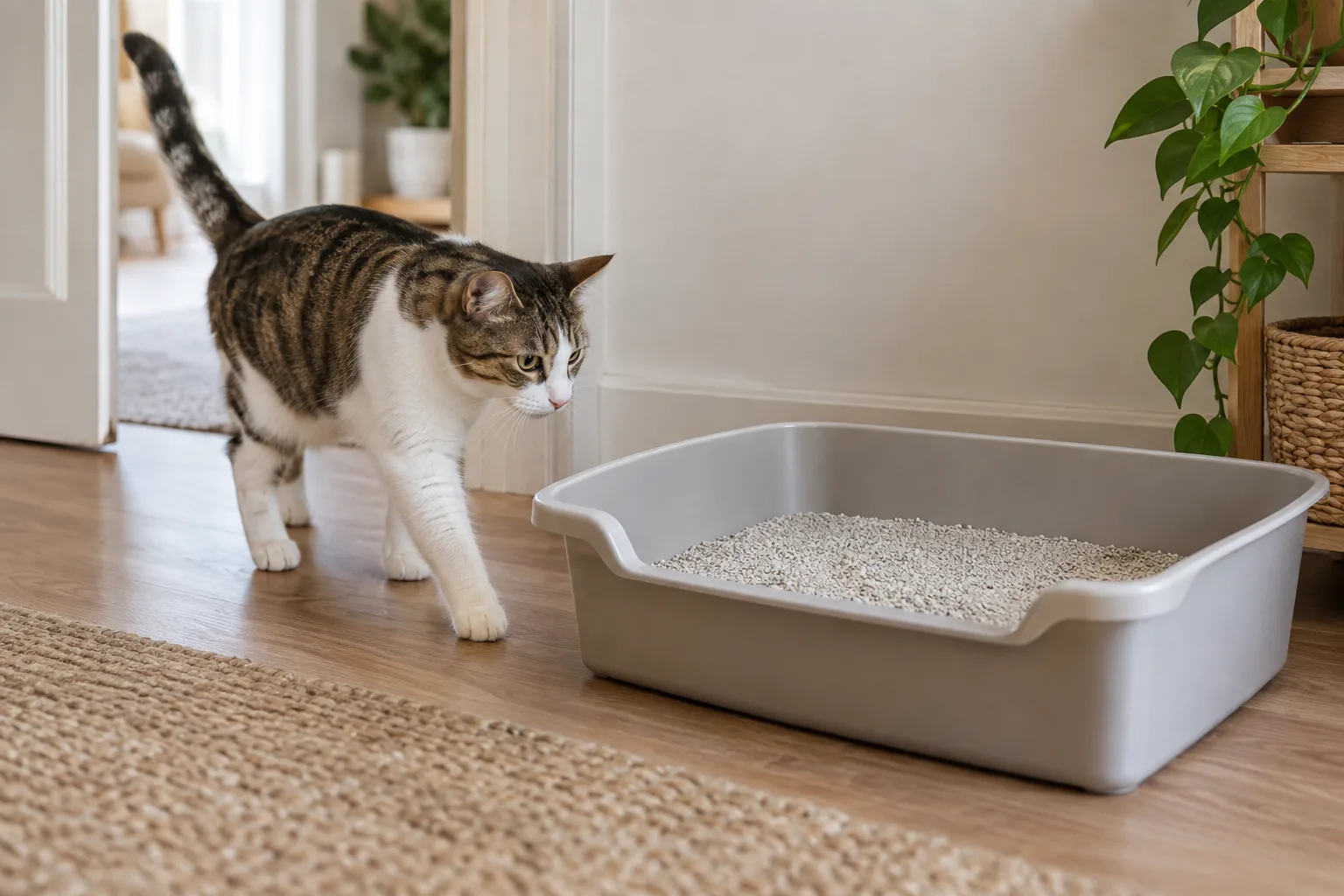
The best litter box is one your cat can use comfortably. It should have room to turn and dig, an easy entrance, litter the cat accepts and a location free from sudden noise or blocked exits. An expensive model cannot make up for poor placement or inadequate cleaning.
Choose a comfortable tray
Consider your cat’s size and mobility. They need to get in easily and turn around. A kitten, senior cat or one with sore joints may benefit from a low entrance. A covered box may look private to people, but can trap smells or restrict escape; some cats prefer an open tray. If you are unsure, offer a choice and see what your cat uses.
Do not suddenly replace a box that works. If a change is needed, offer the new one alongside the old one or in an equally safe spot during the transition. The cat’s actual use is the best measure of acceptance.
Quiet, reliable access
Choose a low-traffic place away from food, water and sleep areas. Avoid washing machines, doors that are often shut and narrow corridors where another pet could block the route. In a home with multiple floors, more than one location may help. In a multi-cat household, spread boxes across different areas; several boxes in one row may still feel like a single bathroom location.
Litter and hygiene
Many cats prefer a fine, unscented texture, though individual preferences matter. If you know their previous litter, start with it. When comparing materials, consider dust, texture, cleaning, availability and whether the cat uses it, rather than only the scent people prefer.
Remove urine and faeces often. Cats Protection recommends scooping twice daily and washing the entire tray at least weekly as a general guide. Use hot water and a gentle cat-safe cleaner, rinse and dry before refilling. Clean sooner if the tray is already dirty.
If use changes
Look for a recent change in box, litter, position or household relationships. A sudden change can also mean pain or illness. Straining, repeated attempts with little or no urine, obvious pain or blood calls for immediate veterinary advice; a urinary blockage is an emergency. Never punish your cat for eliminating outside the box. If use changes suddenly, start with the medical warnings in cat not using the litter box.
Sources consulted
This guide provides general information. If your pet has symptoms, pain or a sudden change in behaviour, speak to a veterinarian. Read our editorial policy.