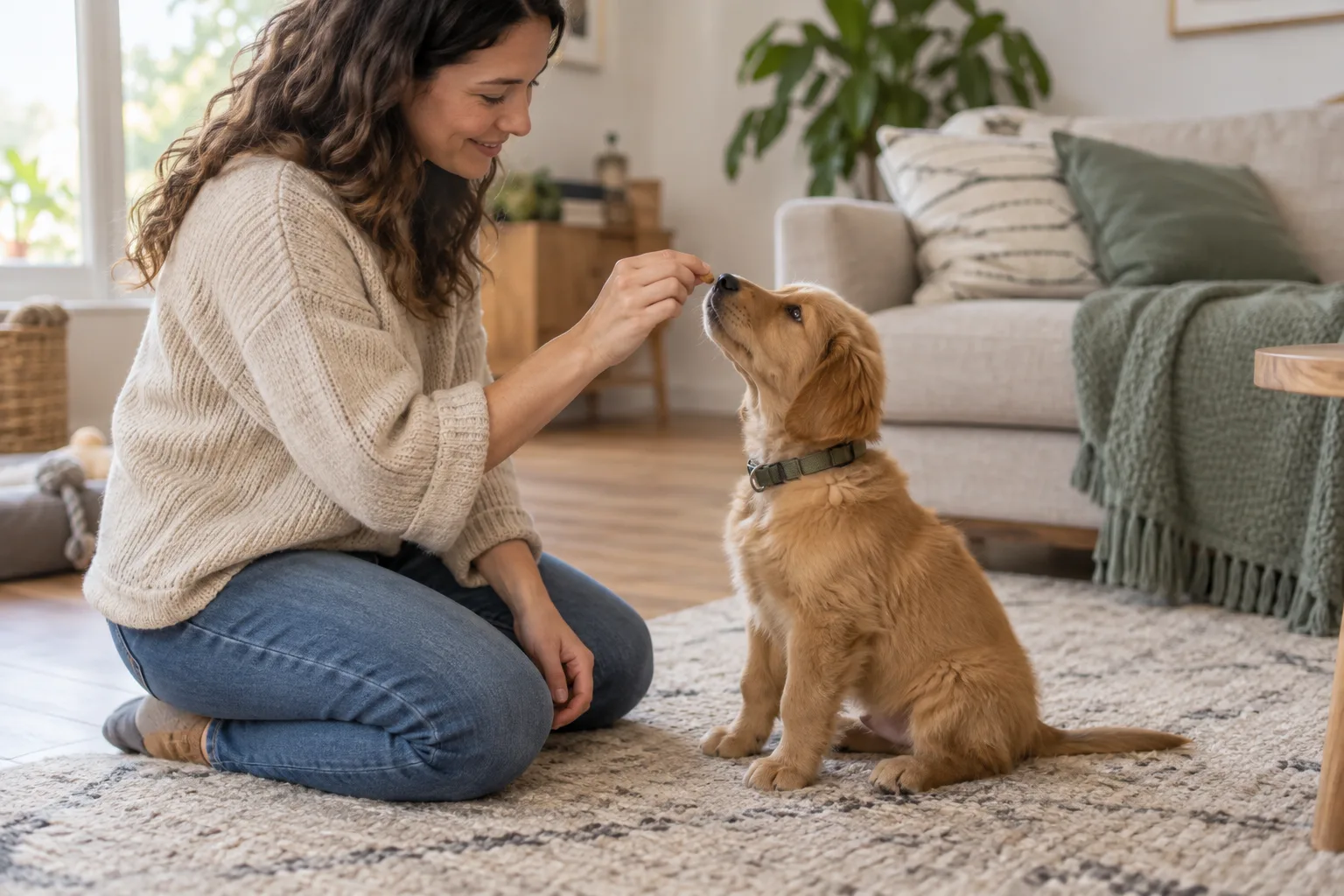
Start by teaching your puppy what you want them to do, then reward it as it happens. A small piece of food, a game or gentle praise can mark success. Keep sessions short, begin somewhere quiet and finish before your puppy gets tired. The American Veterinary Society of Animal Behavior recommends reward-based methods and advises against aversive tools and punishment.
Set up the environment first
Put tempting objects away, limit access to rooms you cannot supervise and make room for naps and toilet breaks. Agree on household rules. A puppy cannot easily understand why jumping up earns attention from one person but a scolding from another.
Keep small rewards handy and count food treats as part of the day’s intake. Notice what else your puppy values: a chance to sniff, play or receive attention can also reinforce a behaviour.
A useful order for early skills
- Name and attention: say the name once and reward a glance towards you.
- Coming when called: practise over a short distance with few distractions. Reward arriving and never call the puppy over to punish them.
- Toileting in the right place: offer chances after waking, meals and play, and praise success. See puppy toilet training.
- Resting and chewing suitable objects: provide naps and safe toys. Redirect mouthing from hands or clothes to a toy; our puppy biting guide explains how.
- Meeting the world: introduce people, sounds and places without forcing greetings. Gradual socialisation is part of education too.
Progress without frustration
At first, reward a small step towards the behaviour. Once your puppy can repeat it, change just one thing: distance, duration or distraction. If they stop succeeding, make the task easier again. Teaching a loose-leash walk takes its own practice; simply walking farther will not teach it.
Avoid shouting, leash jerks and dominance-based techniques. If your puppy shows intense fear, injures someone with a bite, guards objects or changes behaviour abruptly, consult a vet and a qualified reward-based behaviour professional. A general guide cannot assess an individual case.
Sources consulted
This guide provides general information. If your pet has symptoms, pain or a sudden change in behaviour, speak to a veterinarian. Read our editorial policy.