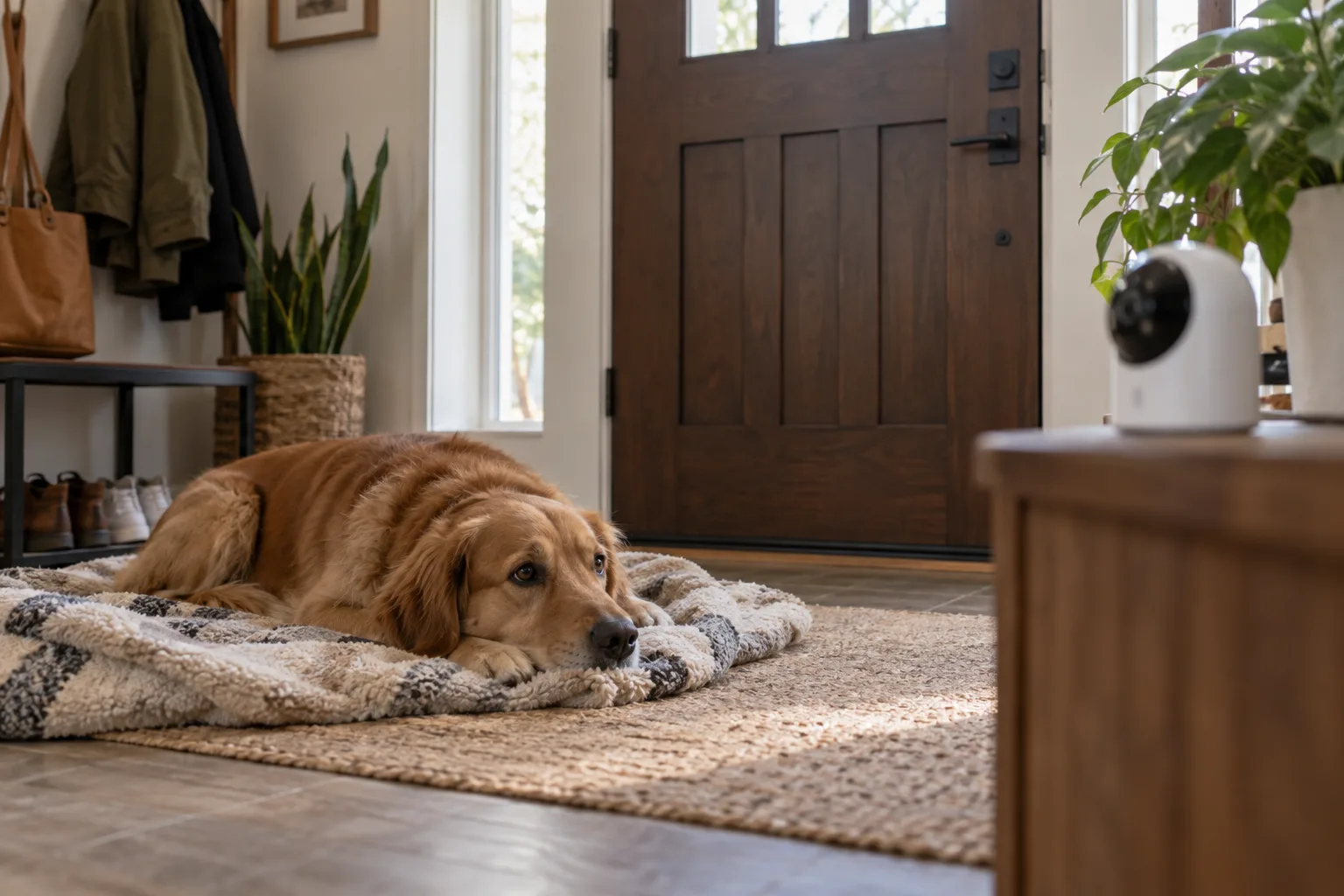
A dog with a separation-related problem may become highly distressed when alone or apart from a particular person. Barking or damaged furniture alone does not confirm a diagnosis. Look for a pattern: when the behaviour begins, what other signals appear and whether the dog settles during the absence.
Signs worth recording
Possible signs include barking or howling, panting, drooling, trembling, pacing, escape attempts, damage near doors, indoor toileting and self-injury. Illness, pain, unmet toilet needs or outside noise can also contribute to some of these. Videos from ordinary absences help a vet understand what is happening.
Note how long you were away and what occurred beforehand: keys, coat or door closing. Does your dog accept food or remain on alert? Do not leave them alone for a long time just to discover their limit. The aim is to gather information without unnecessarily increasing distress.
Seek help and reduce distress now
Arrange a veterinary appointment, especially if the problem began suddenly, your dog hurts themselves or damaged objects could injure them. While you organise help, try to avoid absences that trigger panic where practical. A familiar caregiver or temporary schedule change may help. Explain to anyone caring for the dog that punishment is inappropriate.
Behaviour work often starts with absences so short that the dog remains calm, then progresses only when that stage is comfortable. The starting point varies widely. A vet may consider medication alongside behaviour therapy for some dogs. Be wary of fixed promises about recovery or advice to leave a dog crying until they ‘get used to it’.
First identify the pattern
If all you know is that a neighbour hears barking, begin with observing your dog when alone. Body-language cues can help you describe a recording to a professional. Enrichment and scent games can support everyday welfare, but they are not a substitute for treatment when a dog is suffering.
Sources consulted
This guide provides general information. If your pet has symptoms, pain or a sudden change in behaviour, speak to a veterinarian. Read our editorial policy.