The label
Verify species, growth stage and the large-dog statement when relevant. “All life stages” may exclude growth of large dogs.
Growth · Dogs
Expected adult size helps you choose a growth food. Large puppies need a formula suitable for large-breed growth; puppies on complete food do not need calcium supplements unless a veterinarian identifies a reason.
01 / Nutrition guidance table
Age ranges are only guides. Skeletal maturity and the puppy’s actual growth pattern matter more.
| Expected size | Food to choose | When to review |
|---|---|---|
| 01Small or medium | Complete food for growth; very small puppies may need more frequent meals. | Many reach maturity around 8–12 months. |
| 02Large or giant | Growth food labelled as suitable for dogs expected to reach about 32 kg or more. | Growth can continue around 10–16 months. |
| 03Any size | Measured meals; avoid adding calcium, phosphorus or vitamins without advice. | Track weight and discuss sudden changes with a veterinarian. |
HelloLazo / In context
Unlimited feeding to make a puppy grow quickly can harm skeletal development without improving adult size. Start with pack directions, then use weight and body condition to adjust. If a mixed-breed puppy’s expected size is uncertain, your veterinary team can estimate it and follow a growth chart.
02 / Check at home
Verify species, growth stage and the large-dog statement when relevant. “All life stages” may exclude growth of large dogs.
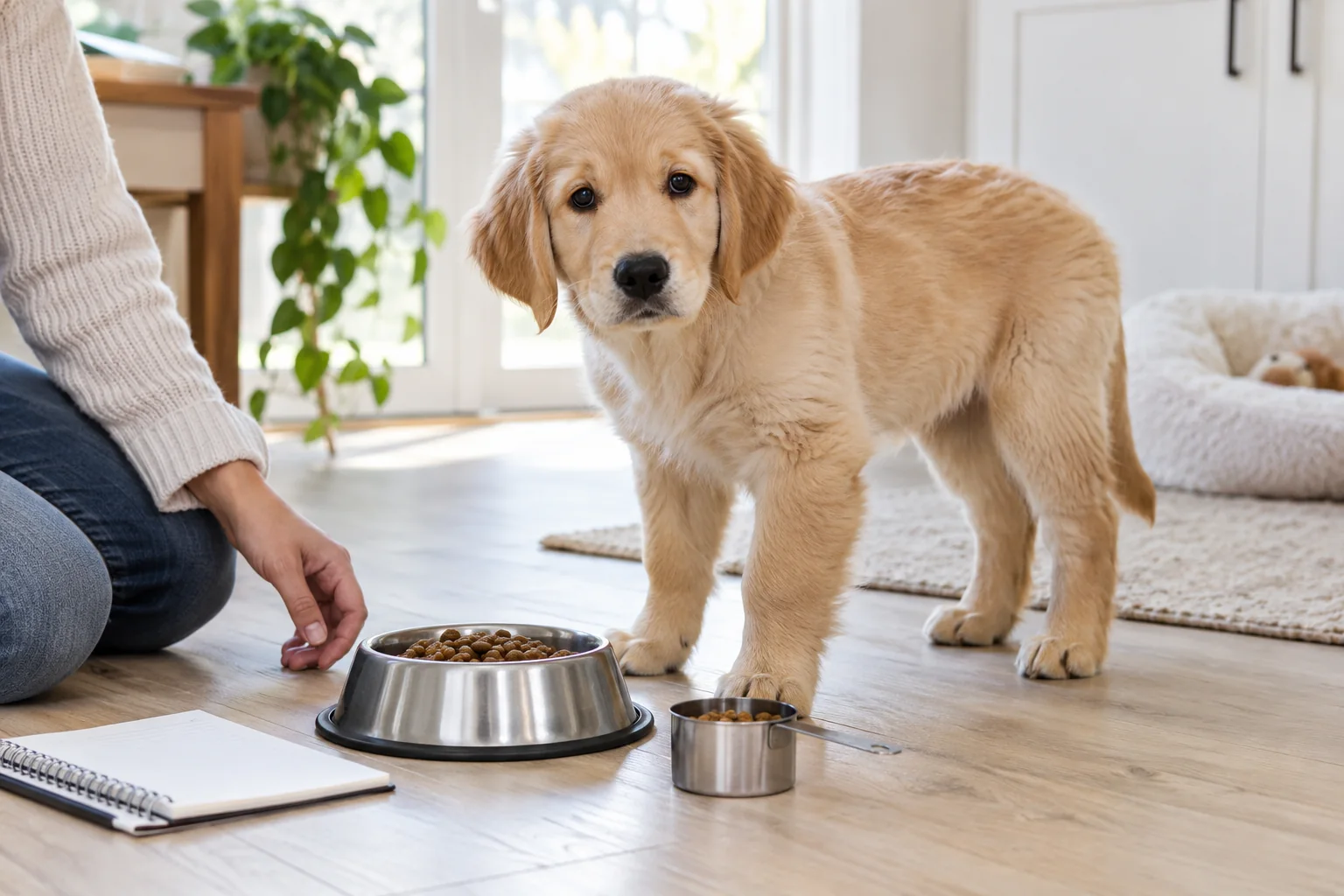
Measure meals and keep a routine. A steady growth pattern matters more than an always-full bowl.
Use part of the daily food allowance for training so reward calories do not quietly add up.
03 / A useful tracking plan
Keep exploring
HelloLazo / Library
Start puppy training with consistent routines, timely rewards and short lessons in recall, calm greetings and everyday manners.
Read guide ↗Growth · DogsFind out which familiar foods dogs may have as small treats, which ones to avoid and when to call a vet.
Read guide ↗04 / Evidence
General information for healthy animals. Illness, weight loss, poor appetite or a therapeutic diet calls for individual veterinary advice. Editorial policy.