Bowl
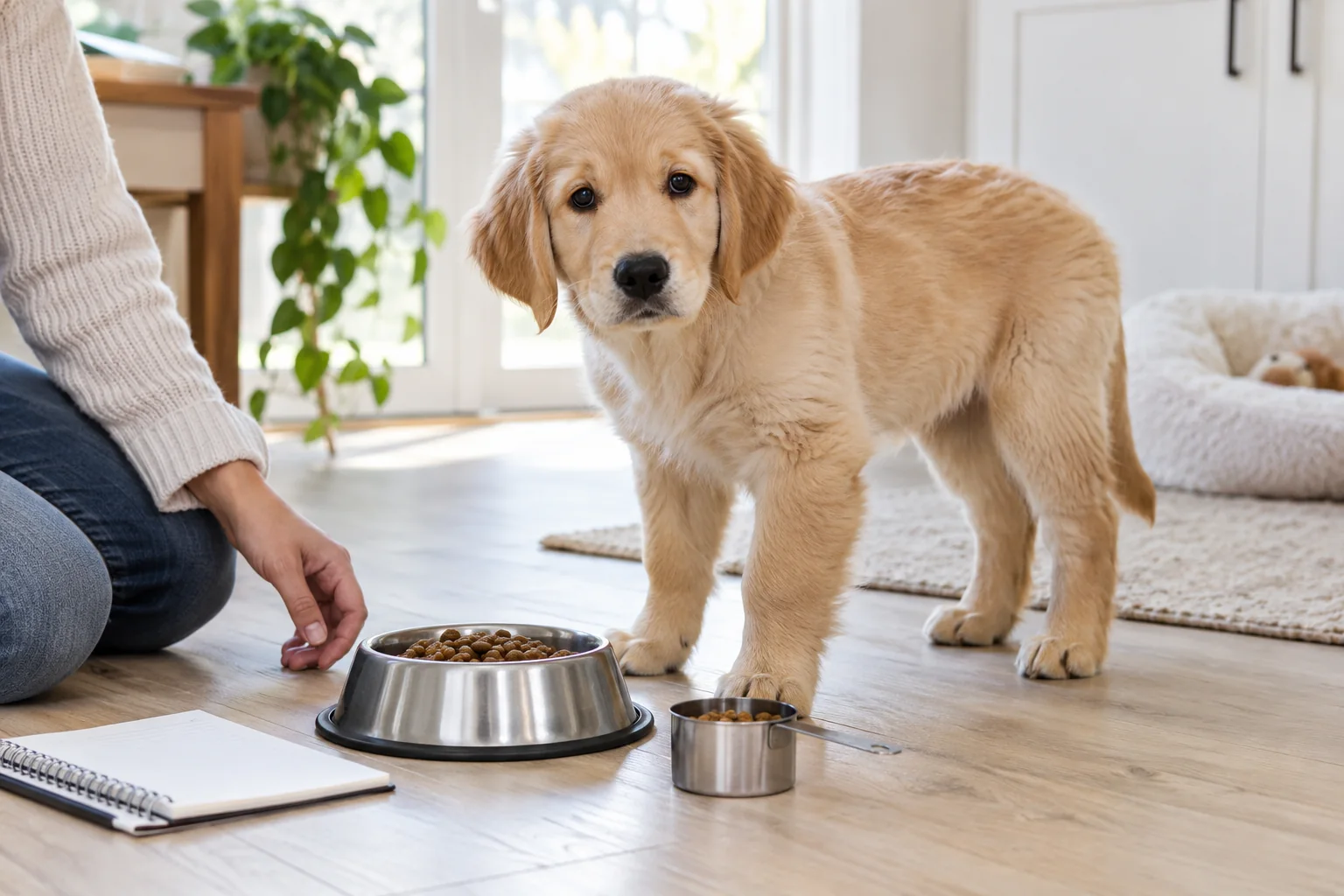
Begin with a measured amount from the label or veterinary plan. Scheduled meals usually make portions easier to manage.
Adult life · Dogs
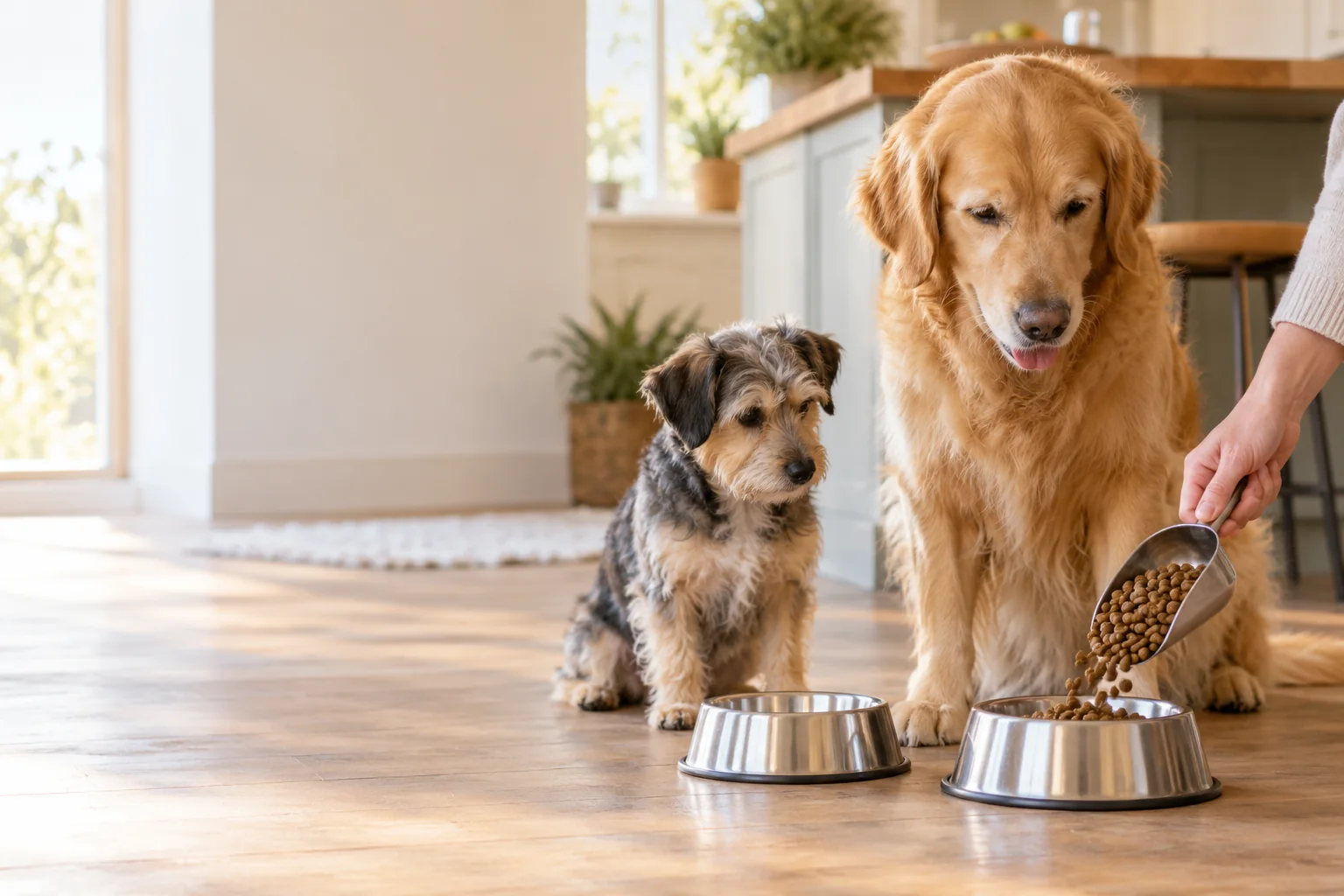
The right amount is the one that maintains a healthy body condition in this individual dog. Age, neutering, activity and health all affect needs; “senior” on the package is not a substitute for assessment.
01 / Nutrition guidance table
These examples show what to check, not universal gram amounts. The main diet should remain complete and appropriate for the animal.
| Situation | Starting point | Useful adjustment |
|---|---|---|
| 01Stable adult | Complete maintenance food in measured portions. | Check weight and body condition regularly. |
| 02Neutered or less active | Watch for lower energy needs. | Reduce extras and adjust portions to the actual trend. |
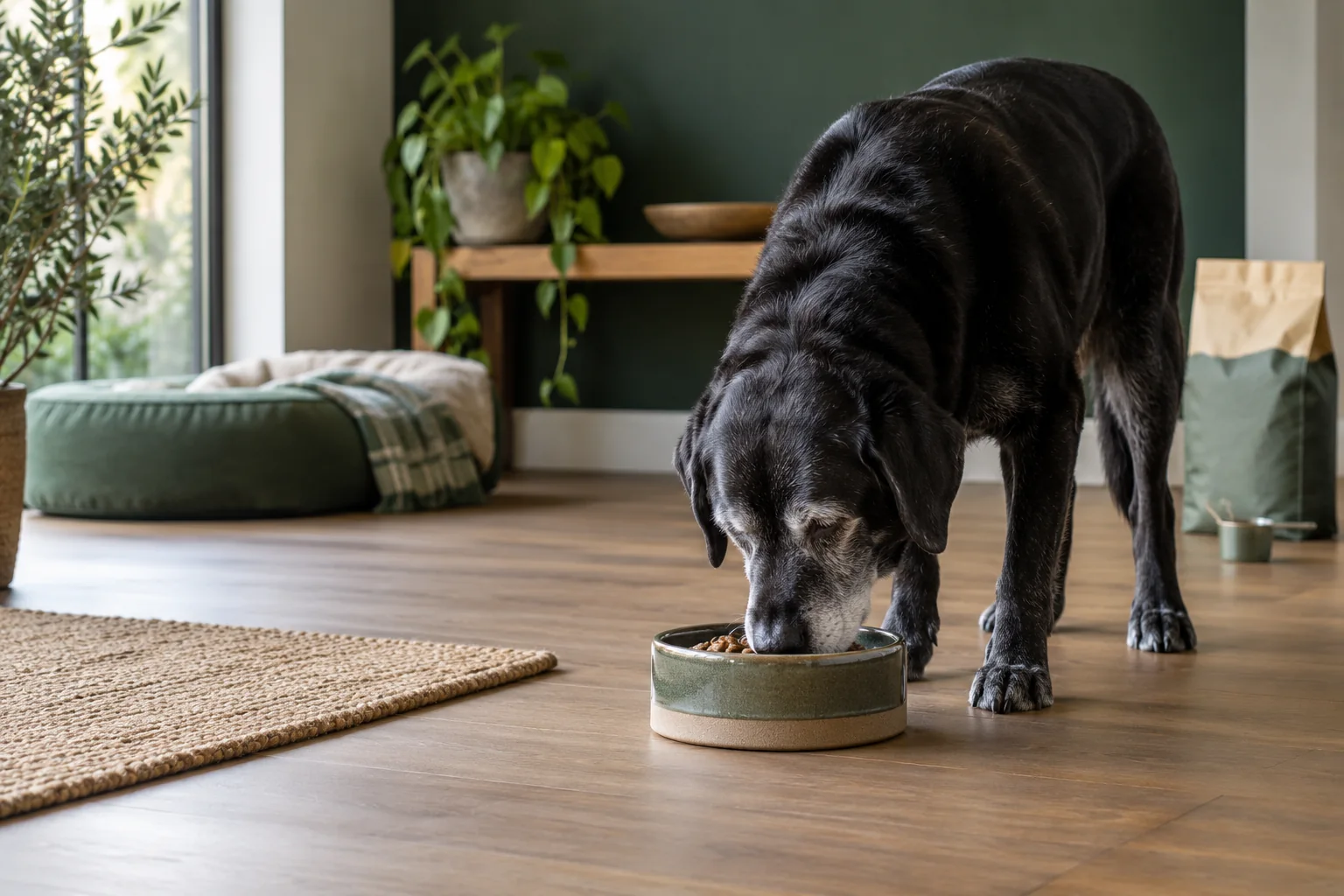
| 03Older dog losing muscle or weight | Veterinary assessment before restricting calories or protein. | Check appetite, muscle and possible disease. |
| 04Breed prone to weight gain | Measure food and rewards; a breed name on the bag is insufficient. | Follow the individual dog’s body condition. |
HelloLazo / In context
Clinical guidance names Labradors and beagles among breeds prone to weight gain, but energy needs vary between dogs. A breed-marketed food may have a particular energy density; judge its nutrient profile and its effect on your own dog rather than the picture on the pack.
02 / A measurable routine
Begin with a measured amount from the label or veterinary plan. Scheduled meals usually make portions easier to manage.
Feel the ribs, look for a waist and weigh consistently. Muscle loss in an older dog deserves attention even if total weight looks steady.
Count snacks and scraps in the daily total; the usual goal is 10% of calories or less.
03 / When to change course
Keep exploring
HelloLazo / Library
Compare dry and wet dog foods using life-stage suitability, nutritional completeness, manufacturer information and calorie content.
Read guide ↗Adult life · DogsFind out which familiar foods dogs may have as small treats, which ones to avoid and when to call a vet.
Read guide ↗04 / Evidence
General information for healthy animals. Illness, weight loss, poor appetite or a therapeutic diet calls for individual veterinary advice. Editorial policy.