Label
Confirm the product is for cats and growth. “Complementary” means it should not be the sole diet.
Growth · Cats
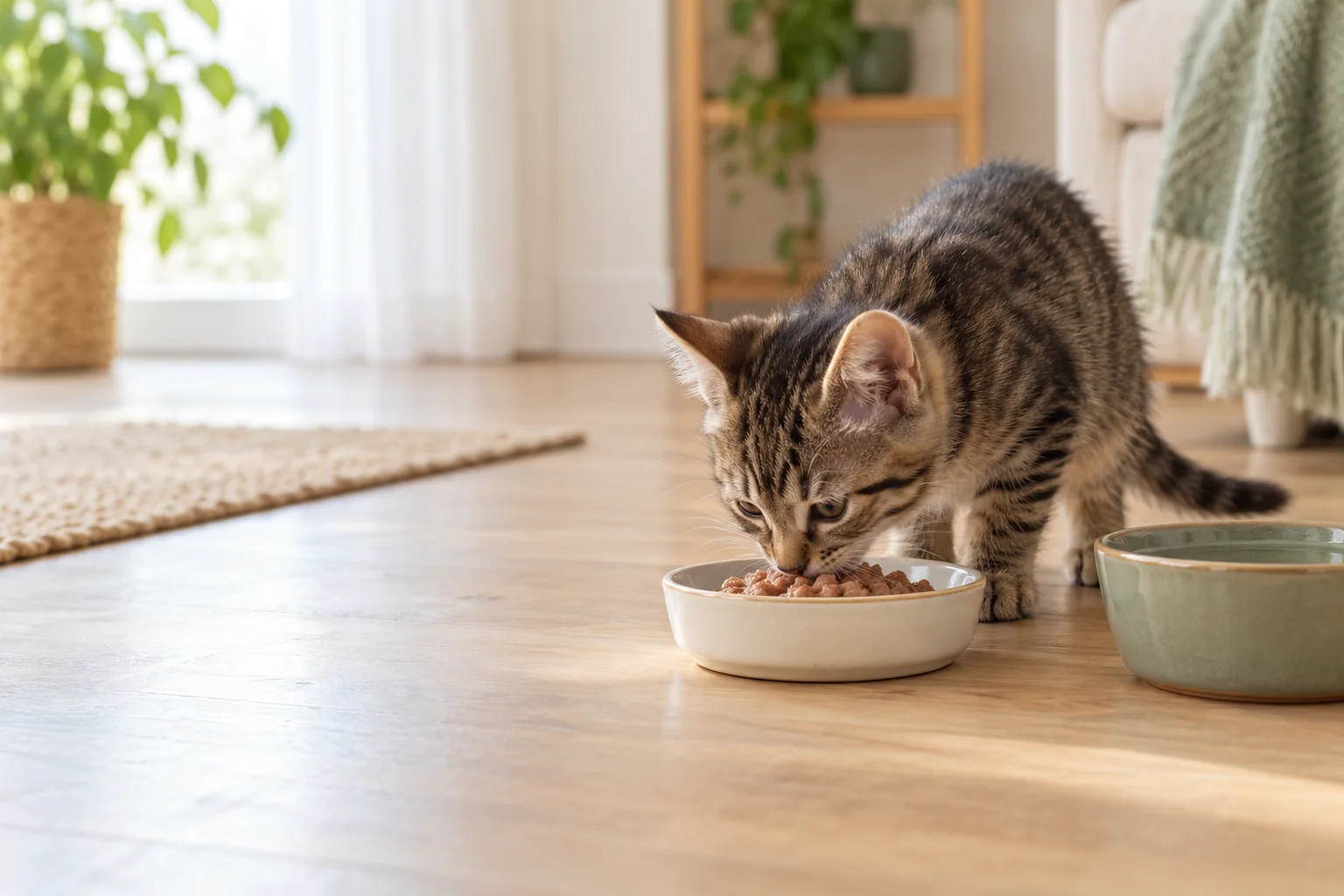
A kitten needs a complete growth food, not table scraps or dog food. Weight, appetite and development guide portion adjustments and the gradual move to adult maintenance food.
01 / Nutrition guidance table
These are broad stages for healthy kittens; individual development and veterinary advice come first.
| When | Bowl foundation | Check |
|---|---|---|
| 01After weaning | Complete kitten food in a texture the kitten can eat. | Confirm eating and weight gain. |
| 02First months | Suitable growth portions spread through the day. | Weight, appetite and body condition at regular checks. |
| 03Around 8–12 months | Consider a gradual change to complete adult food. | Confirm maturity rather than switching by date alone. |
HelloLazo / In context
Rapid growth calls for a different density and balance of nutrients. Complete kitten food covers this stage; adding calcium or vitamins by guesswork can upset that balance. A rescued, very thin kitten or one with persistent diarrhoea needs an individual plan.
02 / Helpful checks
Confirm the product is for cats and growth. “Complementary” means it should not be the sole diet.
Keep fresh water accessible. Complete wet food can add water through the meal.
Change products gradually and observe appetite and stools. Rushing may reduce acceptance.
03 / Simple follow-up
Keep exploring
HelloLazo / Library
Understand nursing, gradual weaning and complete kitten food, plus signs that a young kitten needs urgent veterinary help.
Read guide ↗Growth · CatsChoose complete cat food, understand the limited role of treats and recognise foods you should keep away from your cat.
Read guide ↗04 / Evidence
General information for healthy animals. Illness, weight loss, poor appetite or a therapeutic diet calls for individual veterinary advice. Editorial policy.